
A lot of the best one-man siding repair businesses started as weekend work. You keep your paycheck, you learn the trade, and you build a customer base before you bet everything on it. The question is when to make the jump.
Why start on the side
- No pressure to take bad jobs just to pay the bills.
- Time to learn pricing and the repairs themselves.
- Time to build reviews, referrals and a phone that rings.
- Real numbers instead of guesses.
Signs you're ready to go full time
- Your phone rings more than you can handle on weekends. You're turning down work or booking weeks out.
- Your repair income is steady for several months, not just one good storm.
- You have repeat sources of work: a property manager, a realtor, an inspector who sends you jobs regularly. See property managers.
- You know your numbers: average ticket, jobs per week, material costs, driving time.
- You have savings. Several months of living expenses set aside, plus a cushion for slow weeks and the winter.
- Your truck and tools are paid for or close to it.
The winter question
In cold climates, siding work slows down in winter. If you go full time in spring, you'll have the busy season to build up savings before the slow months. If you go full time in late fall, you're starting in the slowest stretch. Plan around it. See winter work for a siding repair business.
The money you'll need that you didn't pay before
- Health insurance, if your job provided it.
- Business insurance (general liability, plus workers' comp rules where you work).
- Self-employment taxes. Set aside money for taxes from every job.
- Truck and fuel costs you used to drive to work on your own dime.
Talk to an accountant about taxes and setup before you quit.
Mistakes that send guys back to a job
- Quitting after one good month.
- Underpricing to fill the schedule.
- No marketing plan beyond word of mouth.
- Taking every job, including ones outside your lane.
- No savings for the slow season.
A middle step
Some guys go part time at their job first, or take a job with flexible hours. That bridges the gap while the repair business grows.
The payoff
When it works, you set your own schedule, keep what you earn, and build something that's yours. My average ticket is around $350, and a full schedule of repairs adds up. Just make sure it's real before you jump.
Inside Siding Pro Academy, we go over the numbers members tracked before they went full time.
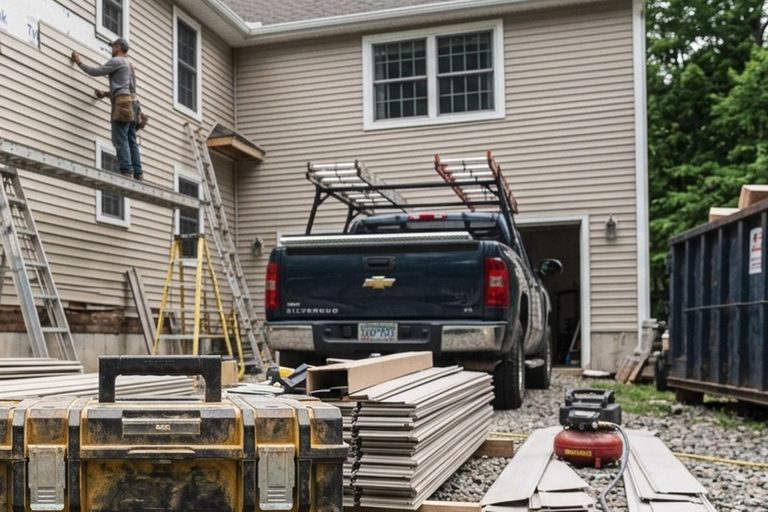
Photo: from a real Siding Pro Academy repair job.