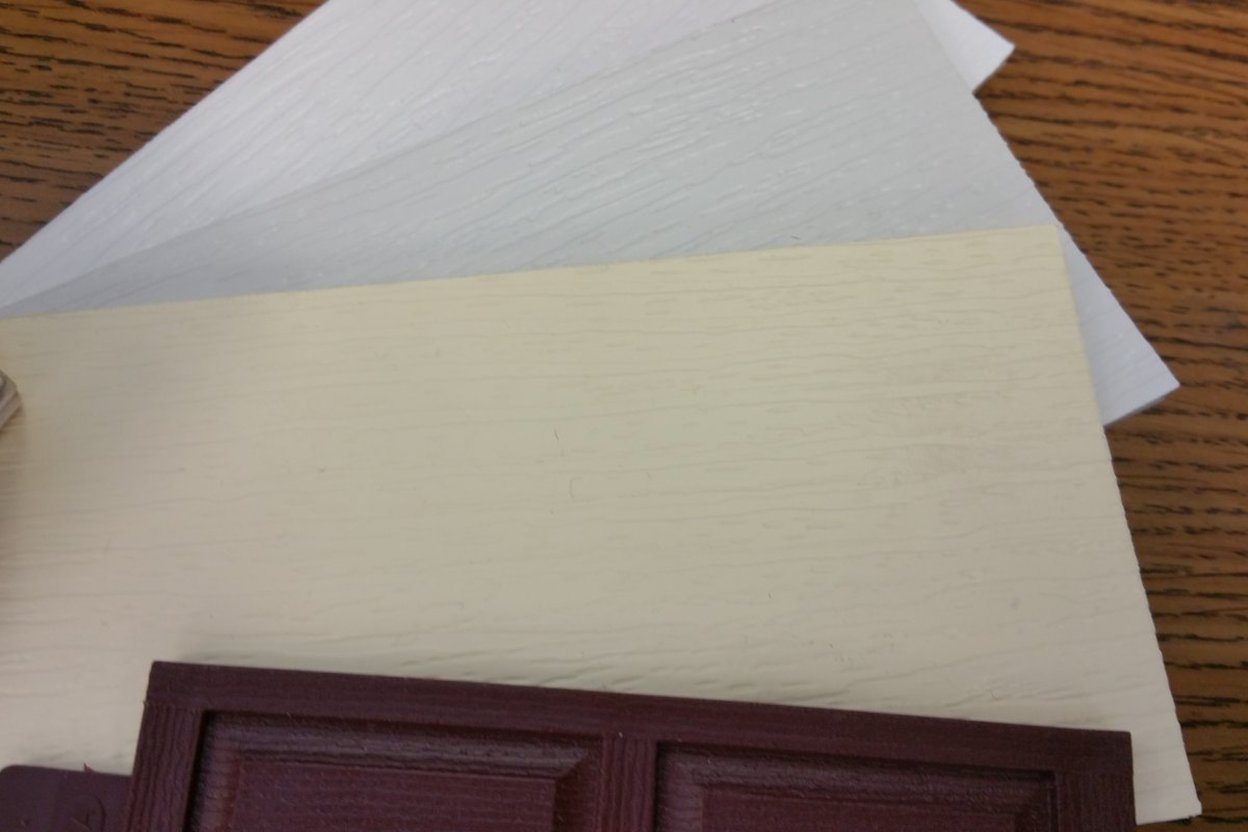

One of the cheapest tools a siding repair guy can carry: a sample board. A few short pieces of the common colors and profiles in your area, screwed to a piece of plywood, riding in the truck.
Why it pays
- Fast matching on the first visit. Hold it up to the wall and you'll know right away if it's a common color or a hunt.
- Fewer trips to the supplier. You know what to order before you leave the driveway.
- Customers get it. Showing a homeowner the actual samples beats describing "it's kind of a tan." They see how close the match will be.
What to put on it
Start with what you see most:
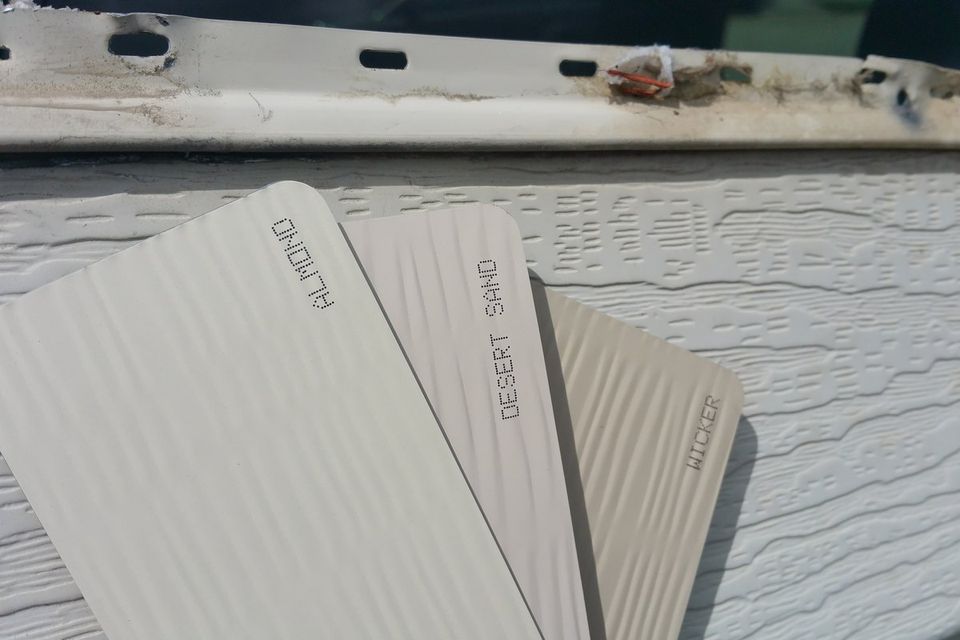
- The common colors from the big brands in your area (your supplier can tell you what sells)
- Your common profiles: double 4, double 5, Dutch lap
- Smooth and woodgrain, if both are common near you
- A few trim colors: white, almond, clay
Write the brand, line and color name on the back of each piece with a paint marker.
How to build it
- Save offcuts from jobs. Short scraps 12 to 16 inches long are plenty.
- Ask your supplier for samples or damaged pieces they'd throw away.
- Screw them to a piece of half-inch plywood with a little space between, so you can pull one off and hold it right against the wall.
- Keep a couple of spare pieces in a bin for colors you haven't added yet.
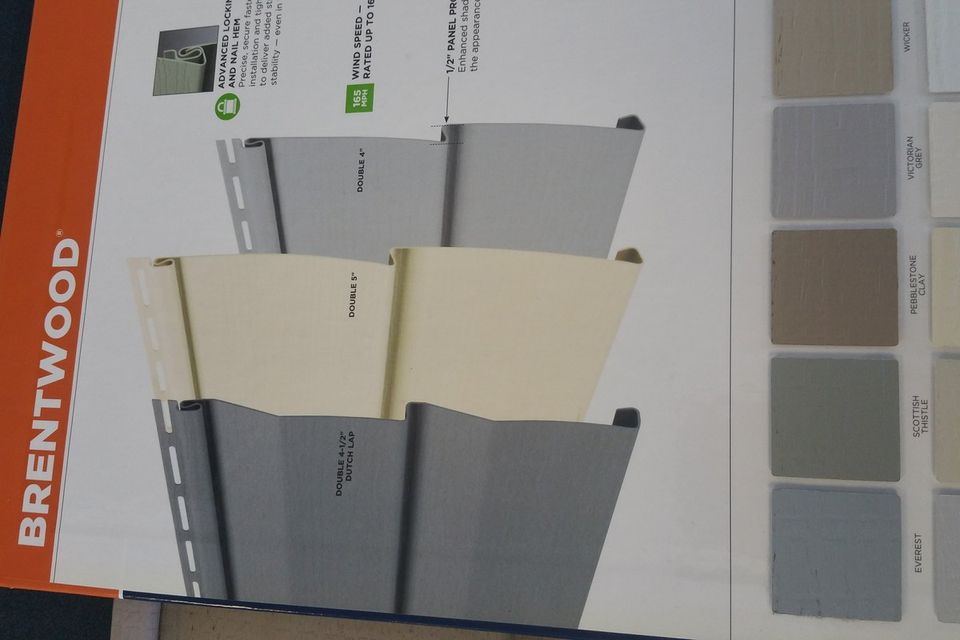
Keep it current
Colors get discontinued, new ones come out. Once or twice a year, ask the supplier what's changed. See stocking common siding colors on the truck and where to buy siding for small repairs.
Faded vs. new
Remember your samples are new. The house isn't. A sample that matches the north wall can look off on the south wall. See matching a faded panel.
Inside Siding Pro Academy, members share the colors they carry and how they built their boards.