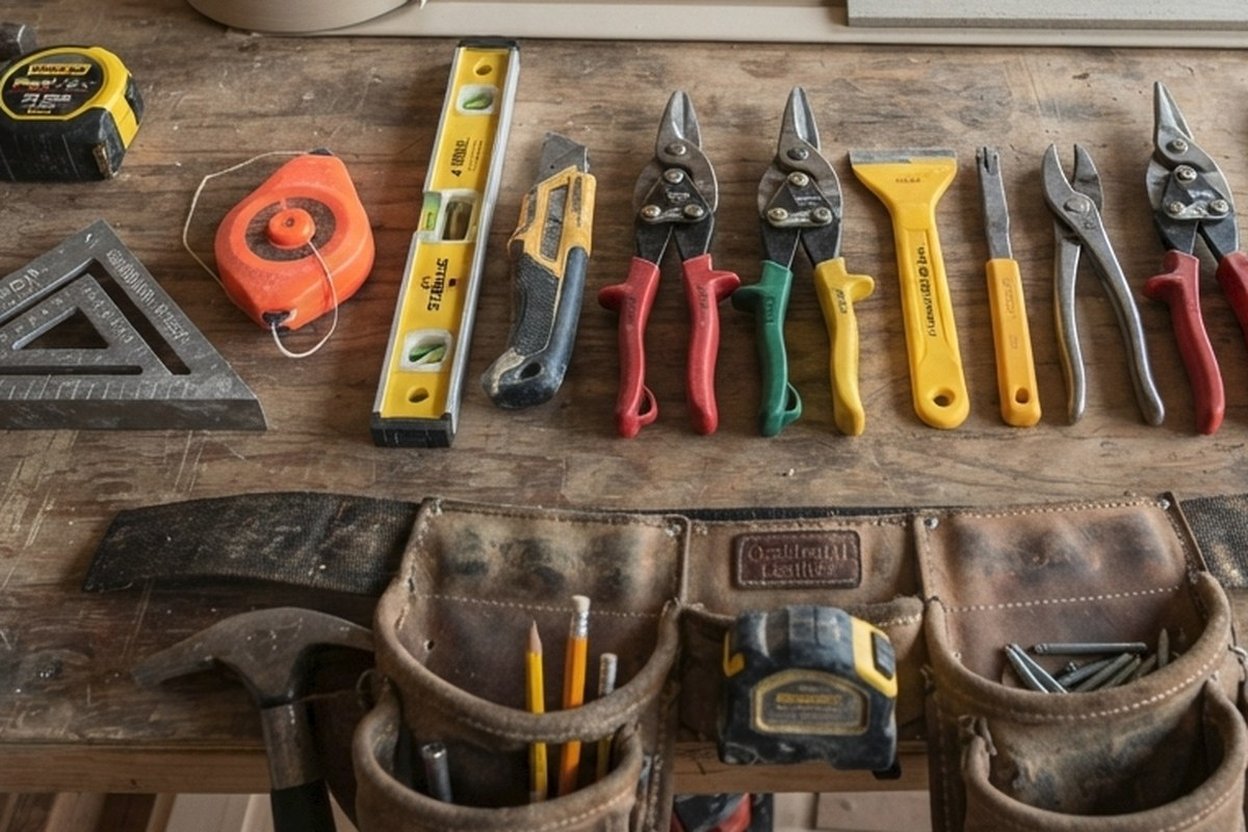
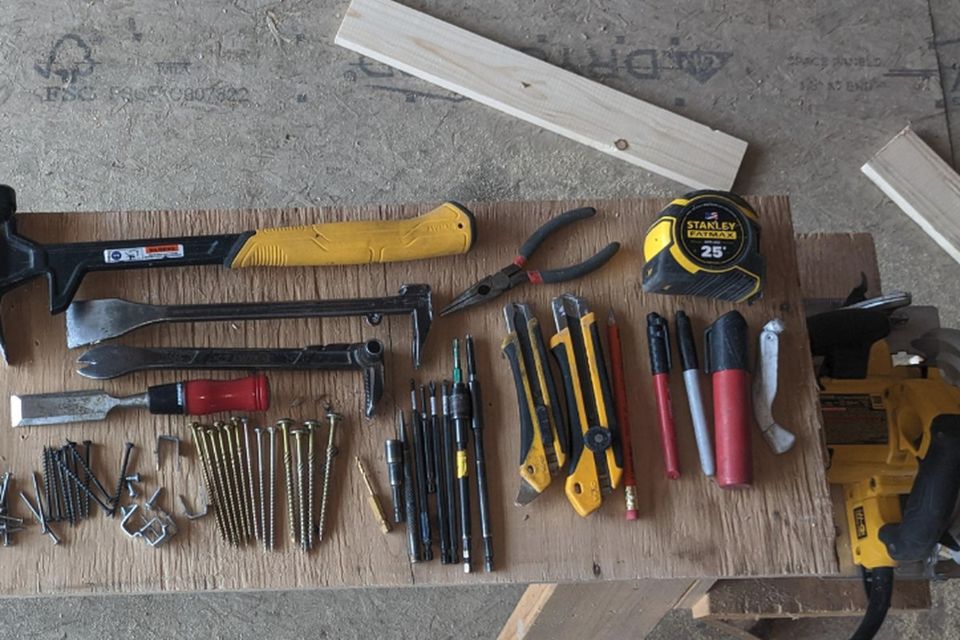
Most vinyl siding repair calls need a short kit that fits in one bucket: a zip tool, a pair of aviation snips, a utility knife, a snap lock punch, a nail hole slot punch, a hand seamer, a hammer, a tape, a speed square and a decent ladder. Bought new, the hand tools come to a few hundred dollars. A full portable brake costs ten times that, and you can put it off until the trim work shows up.
We call it the 85% kit because it covers the jobs that come in week after week: grill melt, wind-blown panels, a cracked course, woodpecker holes, a loose J-channel. The other calls need special tools or aren't jobs you should take. Here's what goes in the bucket, what each tool does, and roughly what it costs.
1. Zip tool (siding removal tool)
This is the tool that makes you a repair guy instead of a re-side guy. You hook the bent end under the bottom lock of the panel above, pull down, and slide it along to unlock the course. Then you can get at the nails of the panel you're replacing without wrecking anything around it.
The common one is the Malco SideSwiper. The old SRT1 is discontinued and the SRT2 replaced it, at about $10–12 as of October 2026. Buy two. One will end up in a gutter or under a deck.
The full walkthrough is in Replacing a Single Vinyl Panel Without Removing the Whole Wall.
2. Aviation snips
A compound-action snip cuts vinyl, aluminum trim coil and flashing. You'll use it on every job: notching around a hose bib, trimming a panel end, cutting coil for a window head.
The Malco Max2000 M2001 (left-cut) runs about $35–49 as of October 2026. Get a left and a right cut so you aren't twisting your wrist on an outside corner. If you're adding a third, make it a straight-cut.
3. Utility knife
Score and snap does most of the straight cuts on a vinyl panel, and it's quieter and cleaner than a saw on a short piece. Score the face, bend it back and forth, and it breaks on the line. Keep a pack of fresh blades in the bucket. A dull blade wanders, and a wandering cut on a visible joint looks bad.
4. Snap lock punch
When you cut a panel down to fit under a window or at the top of a wall, it loses its lock. The snap lock punch puts small raised tabs along the cut edge so the panel catches in the utility trim and stays put.
The Malco SL5 is the one you'll see on the shelf at Lowe's and Menards. Malco says it's for vinyl and aluminum, not steel, and not for use below 32°F. That matters this time of year: vinyl gets brittle in the cold, and a first-freeze morning is a bad time to punch tabs in a panel you only have one of. Do that cut in the truck with the heater on, or wait until afternoon.
5. Nail hole slot punch
This one gets skipped and then missed. On a repair the studs never line up where the factory slots are, and a partial panel or a piece of trim needs a nail where there's no slot. The slot punch puts in a horizontal slot so the panel can still move.
Malco's NHP1R makes a 5/32" x 3/4" slot in vinyl and thin aluminum siding. It costs about $53–64 as of October 2026, which is more than you'd guess for a punch. You'll make the money back the first time you don't have to drill a round hole and come back next summer to a buckled panel.
6. Hammer and the right nails
A regular framing hammer or a dedicated siding hammer both work. What matters is how you nail. The Vinyl Siding Institute's manual says to put the fastener in the center of the slot, get at least 3/4" into a nailable surface, and leave about 1/32" (the thickness of a dime) between the nail head and the vinyl. Tight nailing is the most common reason panels buckle when the weather swings.
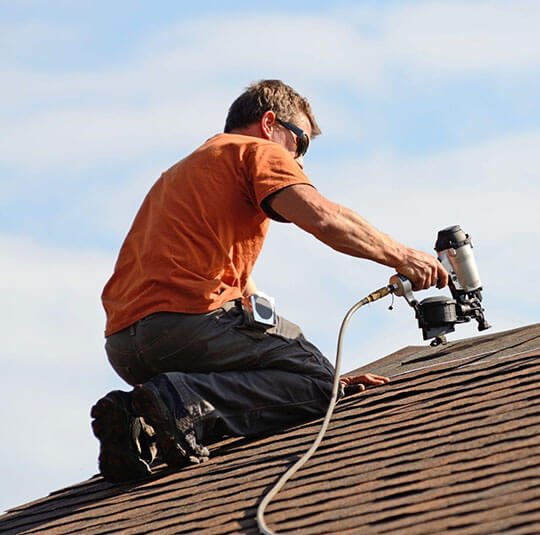
Keep a box of corrosion-resistant siding nails in the truck. A coil nailer is nice on a re-side. For a one-panel repair, the hammer is faster than unpacking the gun and the hose.
If you're looking at a wall that's already buckling, read Wavy Vinyl Siding: Heat, Nailing, or the Wall Behind It before you quote it.
7. Tape, speed square, pencil and a level
Cheap, but you need them on every job. Two gap numbers worth keeping in your head when you measure a replacement piece:
- Leave at least 1/4" at openings and stops for expansion.
- Go to 3/8" when it's below 40°F, which covers most fall mornings from here to spring.
- Overlap panel ends about 1" so they can slide past each other.
8. Hand seamer
A 3" hand seamer bends, flattens and hems small pieces of coil and flashing on the spot. With good snips it handles a short window head flashing, a bent drip edge or a small trim patch without a brake.
The Malco S2R costs about $60–80 as of October 2026 (MSRP is $73). This is the tool that lets you put off the brake.
9. Saw with a fine-tooth blade
For long cuts or a stack of panels, a circular saw or a cordless trim saw with a fine-tooth blade is faster than the knife. Cut slowly in the cold, since that's when vinyl cracks. A lot of repair days you won't take the saw out of the truck at all.
10. A ladder you trust, and standoffs
Most repair work is one or two stories. An extension ladder with standoffs keeps the rails off the wall you're fixing, so you don't crack the panel above the one you just replaced. Add a smaller step ladder for first-course work and soffit. Truck layout is covered in Best Truck or Van Setup for a One-Man Siding Repair Business.
What about the brake?
A full portable siding brake is what you use to wrap window and door trim, fascia and long runs of coil. It's a real tool and it makes real money, but it isn't part of the 85% kit. A Tapco Pro 14 costs about $2,260–2,860 as of October 2026, depending on length and seller.
Buy it once trim and fascia jobs are coming in regularly and you're turning them down or bending pieces at a friend's shop. Until then, the snips and hand seamer cover the small patches, and the supply house can bend a long piece for you if you bring measurements.
If trim leaks are already part of your work, Window and Door Trim Leaks: It's Usually the Cut, Not the Panel explains where a brake pays for itself.
The tools that pay for themselves first
If you're starting with almost nothing, buy in this order:
- Zip tool (two of them)
- Left and right snips
- Utility knife and blades
- Nail hole slot punch
- Snap lock punch
- Hand seamer
That set handles your first several jobs. With an average repair ticket around $350, a single grill-melt job like the one in Grill-Melted Siding: The Fastest Profitable Repair covers most of the bucket.
Inside the Siding Pro Academy, members compare the tools they actually use, the ones that sat in the truck, and what they bought once the brake work started coming in. If you're putting together your first kit, that's where to ask.
The rest of the bucket
Tools don't finish a job if you don't have the panel. Before your next call, check:
- Zip tool, both snips, knife, both punches and the seamer are all in one bucket, not spread around the truck.
- A box of siding nails and a roll of coil in white or almond.
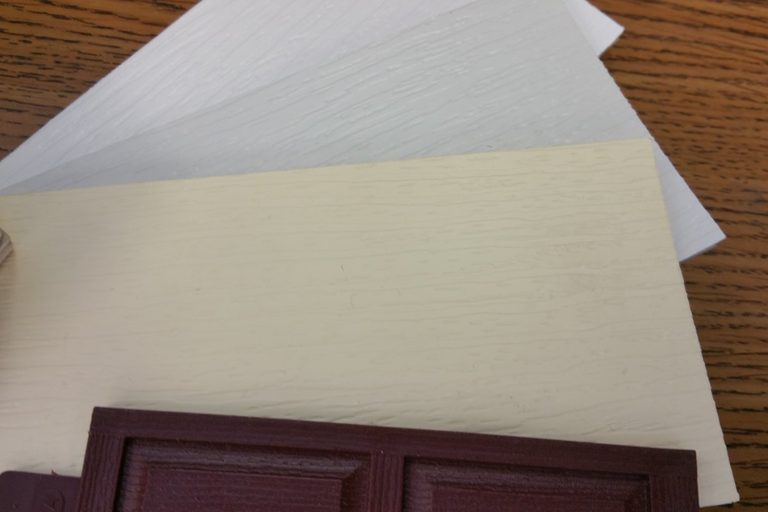
- Your sample board is loaded (The Sample Board You Should Keep in the Truck).
- A few panels in the common colors (Stocking Common Siding Colors: What to Keep on the Truck).
- On cold mornings, the vinyl rides in the cab, not the bed.