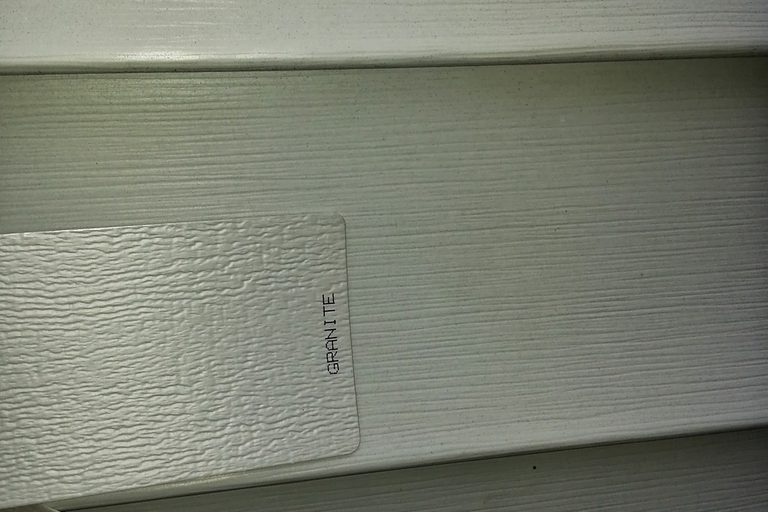
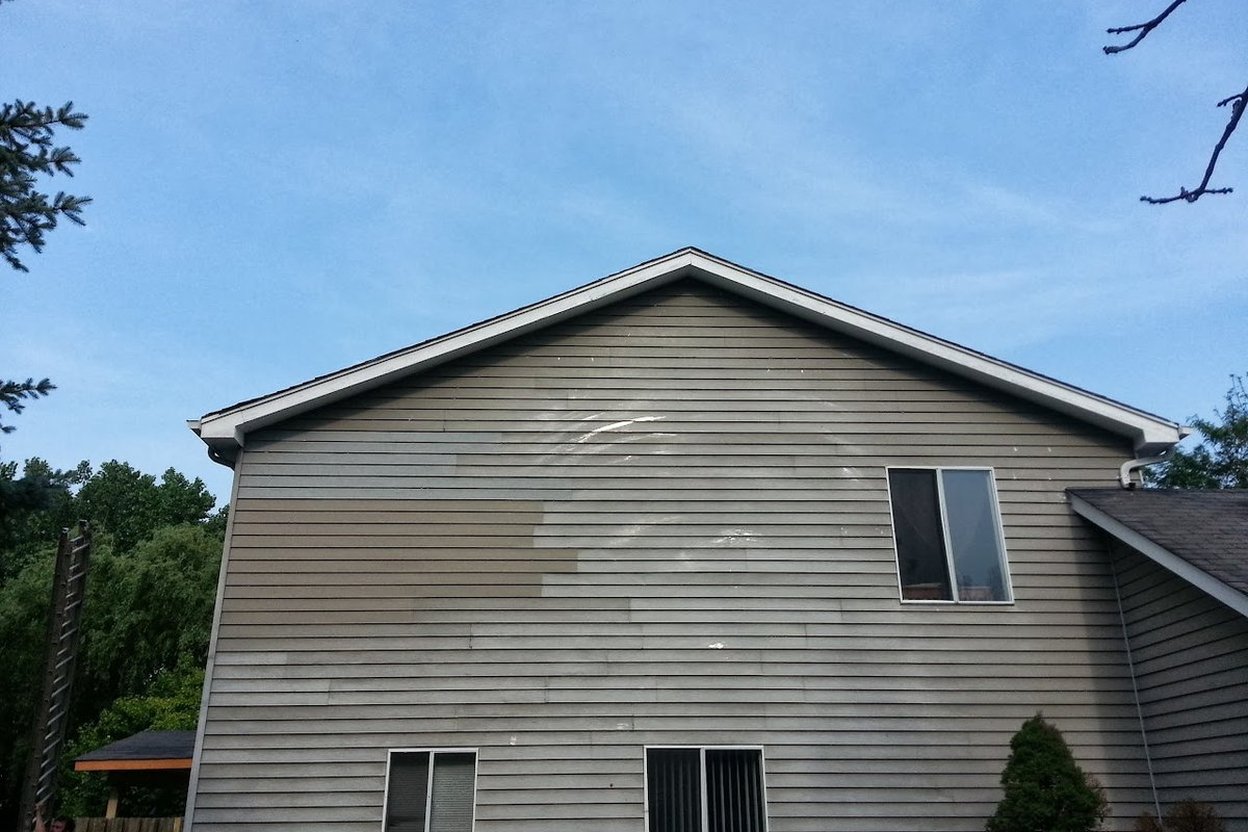
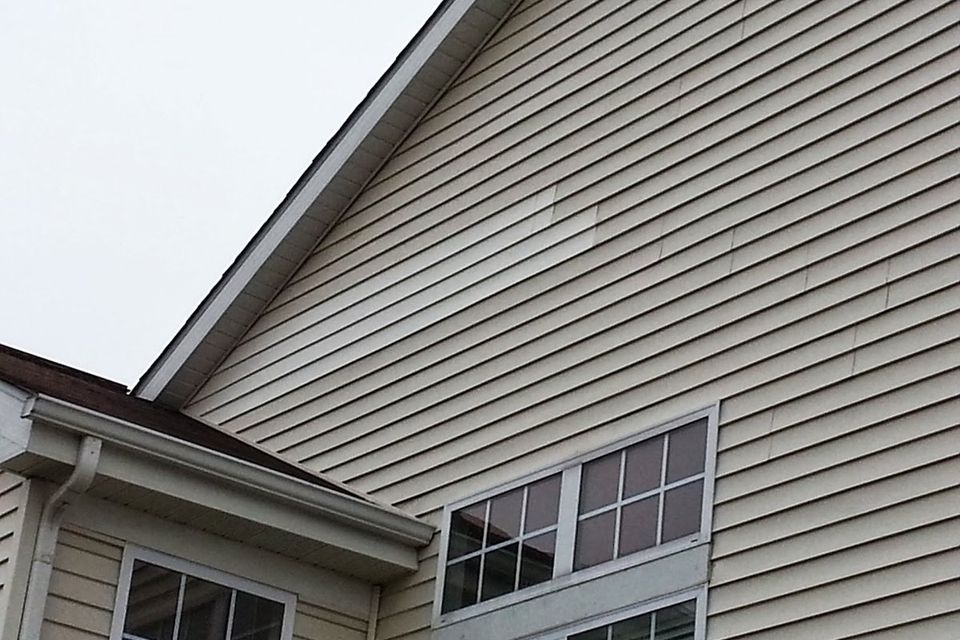
You found the right panel. Same profile, same brand, same color name. You hang it, step back, and it sticks out like a new tooth.
That's fading. Vinyl siding fades with sun, and the south and west walls fade faster than the north side. A new panel in the original color won't match a wall that's been in the sun for 15 years.
The swap
The trick most repair guys use: put the new panel where nobody looks, and use an old one where everybody does.
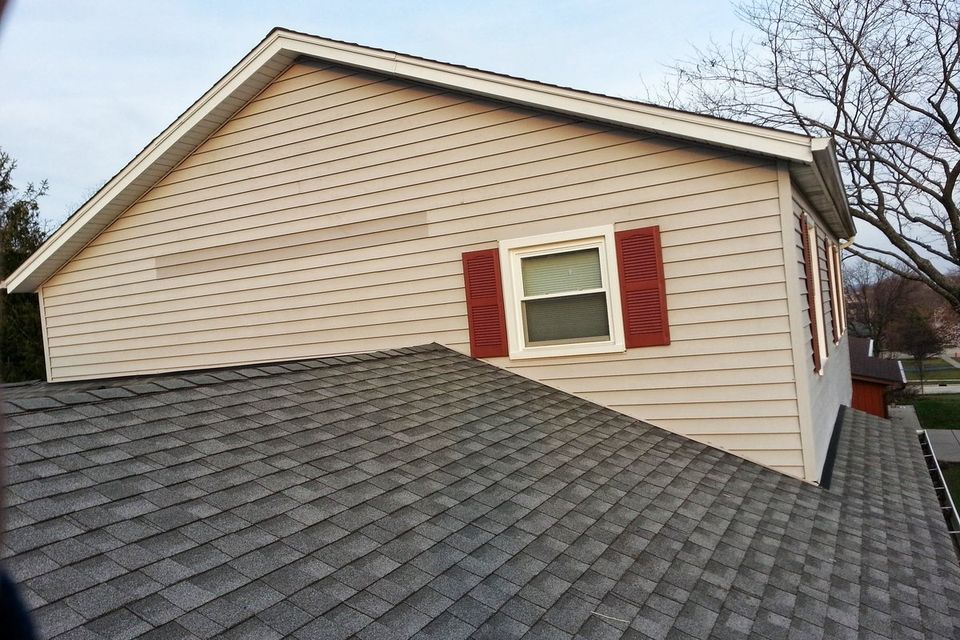
- Find a hidden spot with the same panel: behind a deck, under a porch, behind a shrub, on a garage side that faces the fence. Pick a wall that gets about the same sun as the damaged one if you can.
- Pull a panel from the hidden spot. It's faded about the same as the front of the house.
- Hang that weathered panel where the damage was.
- Hang the new panel in the hidden spot.
The customer sees a repair they can't find. The new panel ends up where nobody notices.
When there's no good place to steal from
- Check the garage or shed. Many homeowners have leftover pieces from the original install. They'll be less faded than the wall, but closer than new.
- Go to a corner or break. Ending a repair at a corner, window or door makes a small color difference much harder to see.
- Do the whole wall section. Sometimes the honest answer is a whole wall between two corners. See matching discontinued vinyl siding.
Tell the customer up front
Before you start, say what to expect: "New siding won't match faded siding exactly. I'll swap pieces so the front looks right, but there may be a slight difference in some light." Put a line about it on the estimate, too. Customers who were warned are happy. Customers who weren't call you back.
Photos
Take photos before and after, from the street. See before-and-after photo reports. A repair nobody can find is the best ad you have.
Inside Siding Pro Academy, members post their swap jobs and talk through tough color matches.