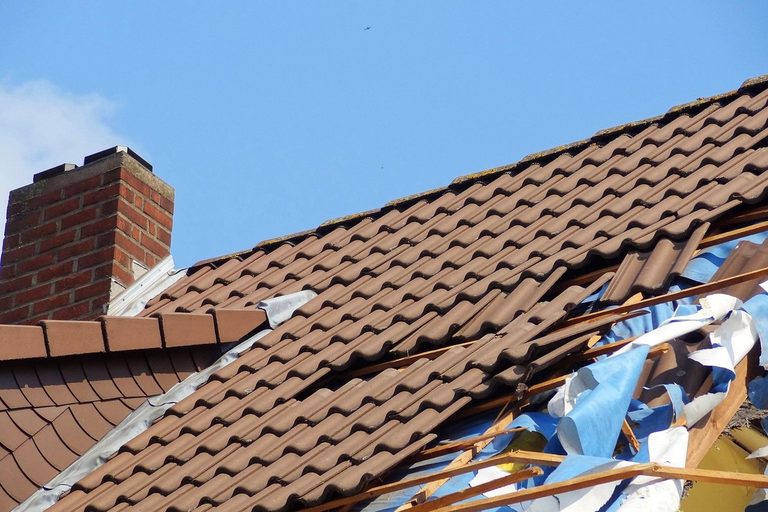
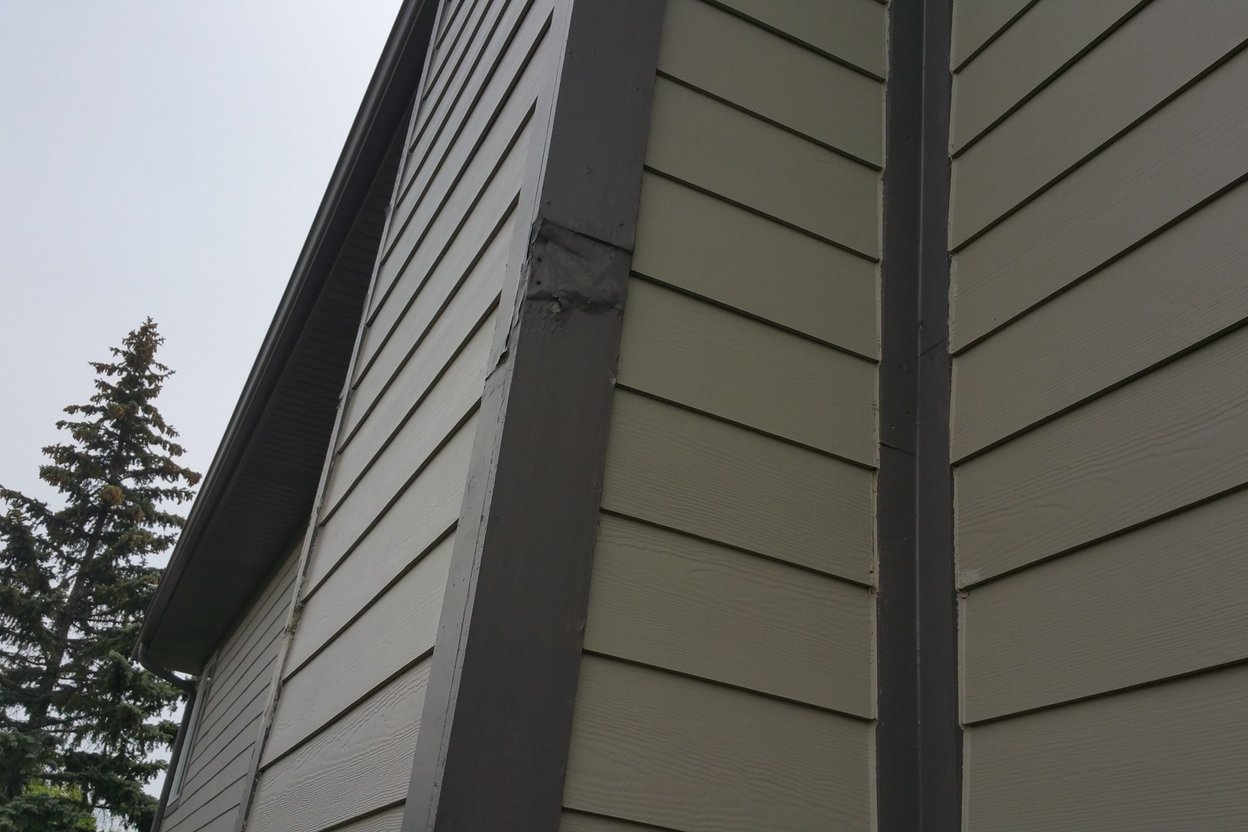
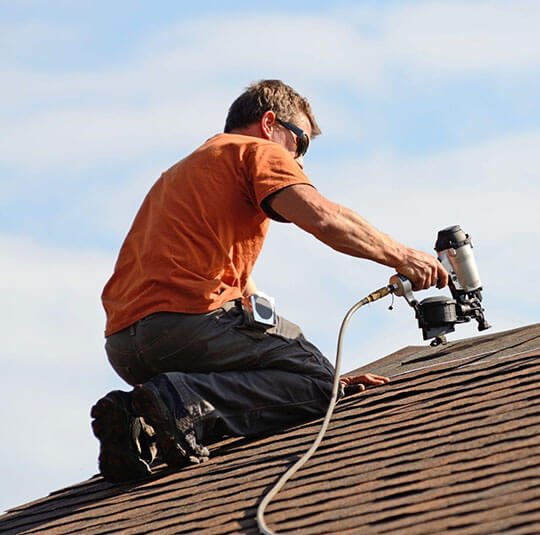
A homeowner calls. A mower kicked up a rock, or a ladder slipped, and now there's a cracked piece of fiber cement about two feet long by the back door. They want it fixed before the family comes for Thanksgiving. You picture one plank and think it's a hundred-dollar job. It isn't. The board is the cheapest thing on the ticket. Most of the money pays for driving there, setting up, cutting the old piece out safely, matching the siding, painting, and covering whatever turns up behind the board. That adds up to a few hours of real work, and it gets priced that way.
Why it's a $650 job
Siding repair has a floor. Fixr puts the minimum charge for small siding repairs at $244 to $454, covering materials, drive time and labor. HomeAdvisor and Bob Vila both say contractors often charge a minimum fee on small repairs to cover travel and their time, though neither gives a dollar amount.
Fixr's range covers siding in general. Fiber cement is heavier work than most. It's harder to cut, it raises dust rules, and the new board shows up primed, not finished, so somebody has to paint it. A repair that takes real hours belongs above that floor.
The $650 is my example number. It is not a published average, and no price guide will hand it to you. It's a reasonable number for a fiber cement patch that takes up a good part of your day once you count the drive, the cutting setup and the paint. Your number depends on your area, your costs and how long the job really takes you. On vinyl, my average ticket worked out to about $350 a repair. That number is a way to think about pricing, not a promise for your zip code, and fiber cement is more work per job.
What a published price guide says
Homeowner price guides quote siding repair by the square foot. That math makes two feet look almost free.
- HomeAdvisor puts fiber cement repair at $3 to $12 per square foot, or $800 to $1,400 for 200 square feet.
- Bob Vila says about $3 to $11 per square foot for fiber cement, materials and labor included.
- Fixr lists fiber cement at $7 to $12 per 10 square feet, which is far lower than the other two. Fixr also puts a 100-square-foot repair at $1,280 to $2,380 across siding types.
Do the math on a 2-foot section of lap siding. You're looking at a few square feet, so by the per-foot numbers the job comes to tens of dollars. Nobody can drive out, set up, cut, patch and paint for that.
Per-square-foot prices are averages from big jobs. On a big job the drive, the setup and the cleanup get spread over hundreds of feet. On a small job they all land on one board. That's why the same guides talk about minimum charges, and why per-foot pricing doesn't work for small jobs. These are also homeowner prices, meaning what customers report paying. They aren't your costs. Use them to see where the market sits, not to build your own price.
What's actually in a 2-foot repair
Here's what the job looks like from your side of the truck:
- The trip. Drive out and back, plus the stop for the board, caulk and paint if you don't keep them on hand.
- Access. Setting up a ladder or staging, or a lift if the damage is high.
- Finding the studs and fasteners. You have to know where the board is held before you cut anything.
- Cutting out the damaged piece. The work is getting the bad section out without cracking the boards above and below it. Fiber cement doesn't flex like vinyl. One wrong move and you're replacing three boards.
- The new board. Cut to length and fastened the way James Hardie's installation instructions call for. Read those for the product on the house, because joints and fasteners are where repairs fail.
- Flashing and caulk. The repair has to shed water as well as the original wall did.
- Prime and paint. Matching color and sheen on a wall that's faded for years. The customer will judge the whole job by this.
- Cleanup. Dust, offcuts and the old board, gone.
Then there's what you can't see. When a board has been cracked for a while, water may have gotten behind it. The sheathing could be soft, or the wrap could be torn. Tell the customer before you start: the price covers the repair as quoted, and rot behind the board gets priced separately once you can see it. Saying this up front saves an argument later.
The cutting and dust rules
Fiber cement contains silica, and cutting it makes dust. OSHA's construction silica standard, 29 CFR 1926.1153, has a table of approved controls. For a handheld saw with a blade 8 inches or smaller cutting fiber-cement board outdoors, the table requires a saw with a commercially available dust collection system. The collector has to deliver at least the airflow the tool maker recommends and use a filter rated 99% or better. If you follow that control outdoors, the table doesn't require a respirator for that task.
James Hardie's silica safety page points the same way. It says HardieBlade blades, dust-collecting saws and shop vacuums can help you meet the standard. It lists the circular-saw control for outdoor cutting only. If you cut indoors, that shortcut doesn't apply.
OSHA rules are written for employers. Once you bring on a helper, they apply to you. Even when you work alone, you're the one breathing the dust.
All of this costs money. A proper saw, the right blade and a vacuum with the right filter all have to be bought, maintained and hauled to every job, including the 2-foot ones. That gear belongs in your minimum charge, the same as your ladder.
The lead paint question on older houses
Fiber cement on a house usually isn't old. The house under it might be. EPA says its Renovation, Repair and Painting (RRP) rule generally applies to work on housing built before 1978. The exception is when a certified inspector, risk assessor or renovator determines the surfaces you'll disturb have no lead paint. EPA also says siding added after 1978 doesn't automatically exempt the job.
There's a "minor repair and maintenance" exception for disturbing 20 square feet or less of painted surface outside. A 2-foot repair is well under that. But EPA counts the entire surface of a removed component, and its exclusions include window replacement and demolition. EPA defines demolition as removing a painted component "in a way that destroys or ruins the component." A cracked board cut out and thrown away could fall under that. The answer isn't obvious, so don't guess. Some states, Texas among them, run their own RRP programs. Check with your state's lead program before you take pre-1978 work.
How to say it to the customer
Keep it short and plain. "This is a minimum-charge job. It's $650. That covers the trip, the setup, cutting the damaged piece out without hurting the boards around it, the new board, flashing and caulk, primer and paint to match, and cleanup. If there's rot behind it, I'll show you before I do anything more."
Then stop talking. Don't apologize, and don't explain that the board only costs so much. The customer isn't paying for the board. They're paying for someone to show up, do it right and leave the wall looking like nothing happened.
Some people will say no, and that's fine. A small job priced below what it really costs isn't worth taking. The customers who say yes are usually the ones who call you back in spring.
Sources (9)
- Fixr: Siding Repair Cost
- HomeAdvisor: Siding Repair Cost
- Bob Vila: Siding Repair Cost
- OSHA: 29 CFR 1926.1153, Respirable Crystalline Silica (Construction)
- James Hardie: Silica Safety Resources
- EPA: Scraping and repainting siding on a pre-1978 home
- EPA: Guidance on "minor repair and maintenance activities"
- 40 C.F.R. § 745.83 (definitions)
- Texas DSHS: Summary of EPA's Renovation, Repair and Painting Rule