
You're at the supply house counter on an October morning with the ITEL report open on your phone. The counter guy reads the product name, checks his screen, and tells you he can't get it. The adjuster has already written the claim around that product, so the homeowner thinks the problem is solved. Don't argue about it. Send paper: a dated letter saying the product can't be bought, a line-by-line spec comparison, and a written request for the carrier's matching rule. Here's how to do each one, in order.
The short answer: send paper, not arguments
The "closest match" on an ITEL report is the result of a database search. It doesn't prove that anyone near you can sell you that siding this month.
ITEL says its service looks for "the closest available match in the market" and finds "a matching and in stock siding product." The report doesn't show how that availability was checked or where the product is stocked. The only way to test the claim is to try to buy it, and that's your job.
Phone calls and arguing in the driveway won't change the file. Paper will. Send three things, in this order:
- A supplier-availability letter. A dated statement on letterhead saying the named product can't be bought, or how long it would take to get.
- A spec comparison. The closest match next to the actual siding on the house, spec by spec, with photos and measurements.
- A request for the rule. Ask, in writing, for the policy language on matching and the state rule the carrier is relying on.
To be clear, this list is my own judgment from the trade side. No regulation tells you what to send. But each item answers one question the adjuster will have to answer anyway: can it be bought, does it match, and what does the policy say about it?
What the ITEL siding report actually says
Before you push back, know what you're pushing back on. ITEL says each vinyl siding match report includes three things:
- A match determination
- A closest matching product when available
- A separate, personalized homeowner report
Look at "when available." The report doesn't always name a product, and when it does name one, it's the closest one in their database. That doesn't mean it's the same siding.
ITEL says it compares material type, projection, profile, gauge, embossment and color against its database. Those six specs matter, because they're the same ones you'll use to compare the match to the house in step two.
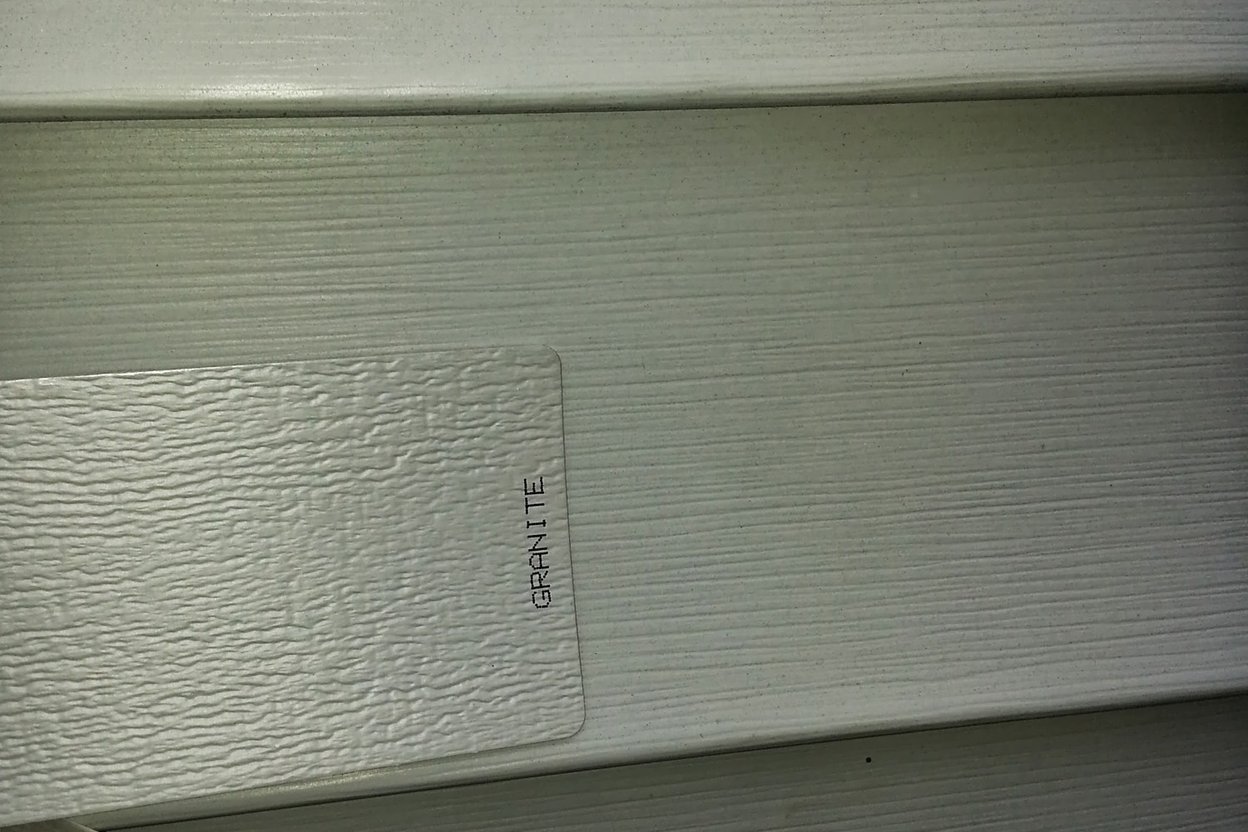
ITEL's sample pricing report reportedly says the closest products are based on the specs the person submitting gave them. So the result can only be as good as the sample and the information sent with it. ITEL also says some samples can only be tested by sending in a physical piece. Its homeowner kits ask for a full-height section with the nail hem and weep hole, at least a foot long. If the adjuster sent in a broken scrap or just a photo, ask what was tested.
Here's what the report does prove: a database found a product with similar specs. Here's what it doesn't prove: that the product is for sale near you, that it looks right on that wall, or that the policy only pays for the damaged pieces.
ITEL is owned by Nearmap now. Nearmap says every submission produces a documented report that's attached to the claim file. That's the adjuster's paper, and you answer it with your own.
Step one: prove the closest match is not for sale
Start with the supplier. ITEL's homeowner kit reportedly lists suppliers by distance and notes that some sell only to contractors, so you may have to show them the report. That's fine. Bring it and ask them to look it up by name.
Then call the manufacturer. A supply house that "can't get it" may mean a bad week. A manufacturer saying the product is discontinued means it's gone. You want both answers if you can get them.
Ask for a written statement, dated, on company letterhead (an email from a company address is the minimum). It should name:
- The exact product and profile from the ITEL report
- The color name, if there is one
- Whether it's discontinued, backordered, or special-order only
- The lead time, if it can be ordered at all
- The name and title of whoever signed it
Again, that list is practical advice, not a required form. But a statement with a date and a name on it goes in the claim file. Something the guy at the counter said doesn't.
Check one more thing before you send anything. One adjuster on a claims forum pointed out that a product can be unavailable from local supply houses but still be sold by manufacturers in other states. If the product can be shipped in from another region, the adjuster will find that out, and your letter will look weak. Ask the manufacturer directly whether the product can be ordered anywhere, and how long it would take. If the answer is "twelve weeks, special order," put that in writing too. A house that sits half-patched from fall until spring is worth stating plainly in the letter.
Step two: compare the closest match to the sample line by line
Even if the product can be ordered, it still has to match. Line up the closest match against what's actually on the house, using the six specs ITEL says it uses:
- Material type. Vinyl versus vinyl is usually fine. Check anyway.
- Profile. Double 4, double 5, Dutch lap, board and batten. Measure the exposure on each course.
- Projection. How far the butt edge sticks out from the wall. A small difference casts a different shadow line, and you can see it from the street.
- Gauge. Measure thickness with calipers. Thinner panels can sit and flex differently.
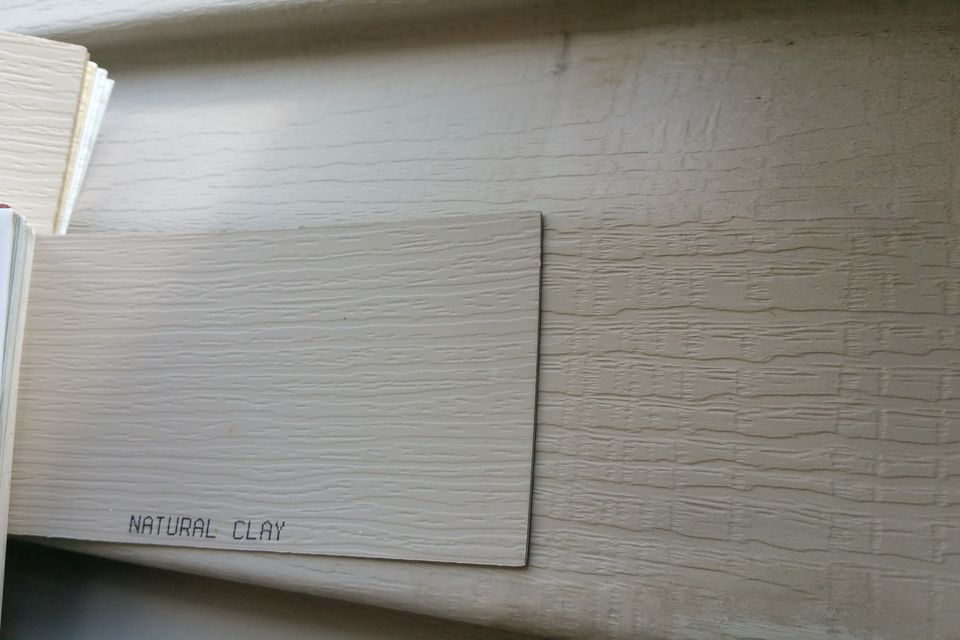
- Embossment. Wood grain, smooth, brushed. Photograph both pieces under the same raking light.
- Color. Hold them side by side outdoors, in daylight, against a weathered panel from the same wall, not against a fresh one from the attic.
Write down every spec that differs, with the number and a photo. Photograph the original and the closest match next to each other with a tape measure in the shot. Take one close-up and one from the distance a neighbor would see it from.
Keep it factual. "Exposure is 4-1/2 inches on the house and 4 inches on the closest match" holds up. "It looks totally different" doesn't.
If the specs really do line up and only the color is off from weathering, say that honestly. It's still a real difference, and it leads straight into step three, because whether a color difference is covered depends on the policy.
Step three: ask for the carrier's rule in writing
This is the part most guys skip, and it's the part that settles the claim. Whether the carrier pays for more than the damaged panels comes down to the policy wording and the state's rule, not to what you or the adjuster think looks right.
There are three kinds of language you'll run into:
- "Reasonably uniform appearance." This comes from the NAIC model claims regulation. When replacement items don't match in quality, color or size, it says the insurer must replace everything in the area to get a reasonably uniform appearance. States have adopted it unevenly.
- "Reasonable match" or "like kind and quality." This is looser and gets argued over on every claim.
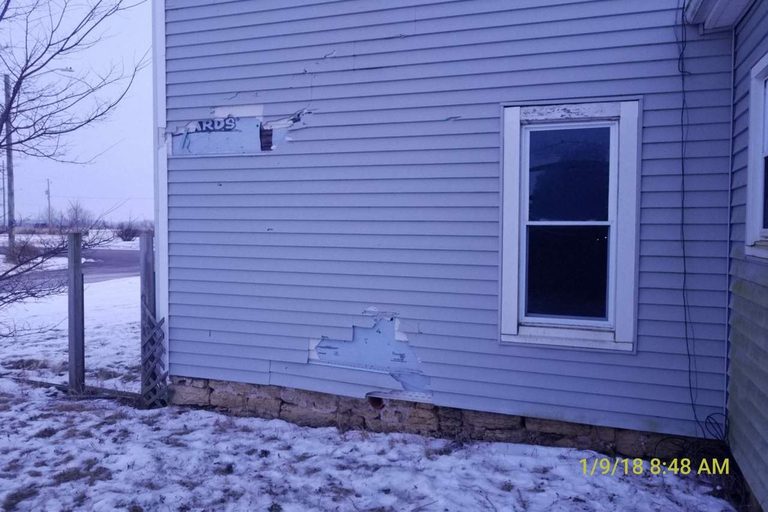
- A mismatch exclusion. Maryland's insurance regulator has said most policies now exclude mismatch and that the policy language governs. Its consumer advisory deals with exactly this case: siding that doesn't match because the manufacturer no longer makes the original.
State rules differ, and I won't pretend to know yours. One legal summary lists Connecticut, Alaska, Nebraska, Iowa (limited to the same line of sight), Montana (an advisory memo), Ohio and Tennessee as having matching rules or guidance, and says Minnesota has case law instead of a regulation. Treat that as a starting point and check your own state's rule before you cite it.
Some homeowners also bought extra coverage. Acuity and Amica both sell optional matching endorsements that cover mismatch from discontinued materials. Acuity's limits run from $10,000 to $40,000, and Amica's go up to $20,000. Ask the homeowner to check their declarations page.
So send a short, polite written request: "Please provide the policy language on matching and any state regulation you're applying to this claim." Your contractor letter helps. The policy wording is what decides it.
If the carrier still says no
Sometimes the paper doesn't change the answer. You still have a few moves, and the homeowner should make most of them, since it's their policy.
- Ask for a re-test. If the first test used a poor sample, send a full-height piece with the nail hem and weep hole.
- Ask about appraisal. If the policy has an appraisal clause, the homeowner can invoke it. A federal court in Illinois sent a hail-damage dispute over siding availability to appraisal in 2018.
- File a complaint. State insurance departments take consumer complaints. Maryland's says so specifically for siding mismatch.
None of this guarantees a full-wall replacement. Some claims end with a patch. Do the work, send it in, and let the file speak for itself. If it drags into Thanksgiving week, keep it moving and keep your copies. The licensing and insurance rules for doing this work where you live are covered in their own articles.
Sources (12)
- itel – Siding Matching
- Nearmap – itel Now
- itel – Sample Vinyl Siding Pricing Report
- itel – Homeowners Roofing and Siding Kit (3.2025)
- CatAdjuster.org forum thread on siding availability
- Property Insurance Coverage Law – NAIC matching standards
- LegalClarity – Which States Are Matching States
- Maryland Insurance Administration – Consumer Advisory: Siding Damage
- Maryland Insurance Administration – Bulletin 18-23
- Acuity – What Is Matching Siding Coverage
- Amica – Matching Roof and Siding Protection
- Lexis Legal News – Illinois siding appraisal ruling