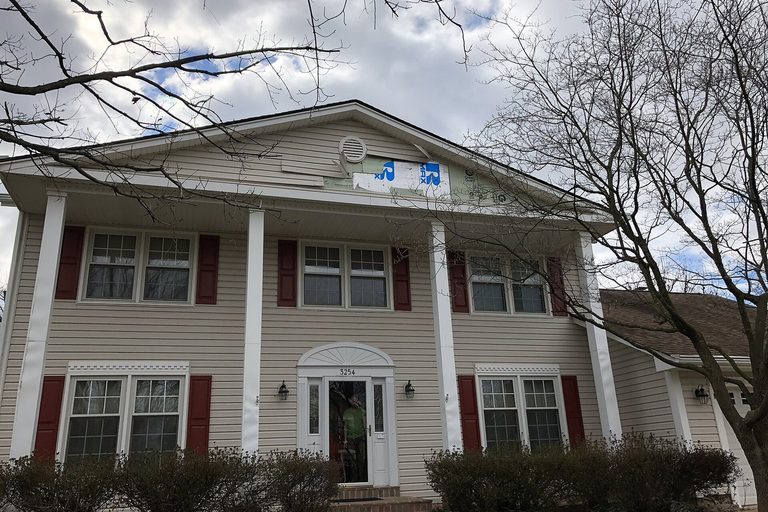


It's the first week of December. Thanksgiving leftovers are gone, the truck is clean, and the phone hasn't rung since Tuesday. Use that quiet. Call the people you already worked for in the last 18 months. Ask how the job is holding up, mention one thing you noticed while you were there, and offer to come look at it while your schedule is open. Make a few calls a day for a couple of weeks. It's low-pressure, it's cheap, and it's the warmest work you can find in December.
Why call now, and who to call
For exterior trades in cold country, the slow stretch usually runs from December into early spring. Leads dry up. People are thinking about presents and travel, not their siding. That's the reason to call now. You have time, and the people on your list have already met you, let you onto their property, and paid you.
Keep the list to customers from the last 18 months. That's recent enough that they remember your name and the job. It's also the window the federal telemarketing rules treat as an existing business relationship, which I'll get to below.
Don't try to call everyone in one afternoon. Spread it over the stretch between Thanksgiving and Christmas, a few calls a day. If you do 8 to 10 repair jobs a month in season, your 18-month list could be well over a hundred names. Two weeks of steady calling covers a big piece of it without making you dread the phone.
Why past customers beat new leads
Every new lead costs you something before you ever pick up a tool, whether it's ad money, time on a bidding site, or a free estimate that goes nowhere. A past customer costs you a phone call.
The business research says the same thing. Harvard Business Review puts the cost of landing a new customer at "anywhere from five to 25 times more" than keeping an existing one, depending on the study and the industry. The same article cites Bain & Company research that a 5% bump in retention raised profits by 25% to 95%.
Closer to our world, a ServiceTitan report on home-service contractors found that repeat customers made up 58% of completed jobs and 39% of yearly revenue. A ProRemodeler survey puts repeats and referrals at close to 80% of remodelers' lead activity.
Treat those as rough numbers. They come from big companies, other trades and different years, not from siding repair. The direction is still clear: the people who already trust you are where the easy work is.
Build the list in an hour
You don't need software for this. You need an hour, a notepad or a spreadsheet, and your records.
Go through three places:
- Invoices from the last 18 months, whether paper, QuickBooks, or a stack of carbon copies.
- Text threads with customers. Photos you sent them often show exactly what you fixed.
- Your phone's call log, for the jobs that never got a proper invoice.
For each customer, write down:
- Name, phone number and address
- What you fixed and the date
- Anything you noticed but didn't fix: a cracked J-channel, a loose corner post, caulk pulling away at a window, a drip edge that looked tired
- Anything you told them you'd "keep an eye on"
That last column is the gold. It's a real reason to call that isn't a sales pitch.
Before you dial, cross off anyone who told you not to contact them, anyone who disputed a bill, and anyone you'd rather not work for again. A short, good list beats a long one.
What to say
This is a check-in call, not a pitch. You're the guy who fixed their siding, calling to see how it's doing. If you keep it that way, the call is easy to make and easy to take.
A good call has four parts:
- Open with the old job. Say who you are and remind them what you did and roughly when, like the storm damage on the back wall last spring. Most people need a second to place you.
- Ask if it's holding up. Then listen. If something's wrong, that's your first job of the winter, and you'd want to know anyway.
- Mention one real thing. Bring up the item from your notes: the caulk around the kitchen window, the loose trim by the garage, the drip edge you pointed out. Keep it to one thing and keep it honest. If you didn't notice anything, don't make something up. Just ask whether anything new has come up since you were there.
- Offer your time. Tell them your schedule is open for the next few weeks and you'd be glad to come take a look. If now isn't good, offer to put them on your list for the first mild stretch or for spring.
Ask for a referral only after they've told you they're happy with the work. One remodeling contractor's yearly check-in call runs this same order: remind them of the job, ask if they're still happy, and only then ask if they know anyone who could use you. If they're not happy, fix that first and don't ask.
Don't read a script. People hear it in the first five words. Jot down the four points in your own words and talk like you would on their driveway. If the call goes sideways, thank them and let them go.
Rules on calls and texts
This is not legal advice. It's a short list of what to know so you don't step on a rule without meaning to.
A friendly check-in may not count as telemarketing at all, but the moment you offer to do paid work it starts to look like a sales call. The safe move is to follow the rules either way.
- The 18-month window. Under the federal Telemarketing Sales Rule, someone who bought from you within the last 540 days (about 18 months) has an established business relationship with you. That lets you call them even if their number is on the National Do Not Call Registry. Someone who only asked for a quote counts for 90 days.
- Calling hours. No sales calls to a home before 8 a.m. or after 9 p.m. their local time.
- "Don't call me" wins. If someone says they don't want calls from you, the 18-month exception no longer helps. Stop right away, write it on your list, and don't call again.
- Texts have their own rules. Under the federal Telephone Consumer Protection Act, the FCC treats replies like "stop," "quit," "end," "revoke," "opt out," "cancel" and "unsubscribe" as an opt-out. Honor any of them. The FCC adopted new consent-revocation rules in October 2026 that are still taking effect, so watch for updates. Penalties for texting violations can reach $500 per message and more if it's willful.
- Your state may be stricter. Some states have tighter calling hours, Sunday limits, or their own do-not-call lists. Check your state attorney general's website before you start.
Keep it calm and track it
Cap the calls at 5 to 10 a day. That's enough to keep things moving without turning December into a call-center job. Do them at the same time each day, like late morning, when people are more likely to pick up and less likely to be eating dinner.
Log every call on the same list you built: date, who answered, what they said, and the next step. "Left voicemail," "wants a look in January," and "do not call" all go on the sheet.
Follow up once. If you left a voicemail and didn't hear back, try one more time a week or so later, then stop. A customer who doesn't answer twice isn't a lost customer. They're just busy, and they'll still remember you in spring.
Offer jobs that fit the season, such as inspections, small fixes on milder days, and booking spring work now. If you want a hook, make it narrow. Some contractor marketers suggest a limited-time offer on select services instead of cutting prices across the board. Don't discount your whole price list. The customers you call in December are the same ones you'll be pricing in May.
Sources (11)
- Hook Agency: Slow season roofing in winter
- Jones: 5 strategies to handle the slow season
- Harvard Business Review: The Value of Keeping the Right Customers
- Webtonic: HVAC lifecycle and retention marketing statistics (summarizing ServiceTitan)
- ProRemodeler: Business results survey, repeats and referrals
- JLC: Repeat After Me
- 1cademy: Review and referral request timing for electrical contractors
- Cornell LII: 16 CFR 310.2, Definitions
- Cornell LII: 16 CFR 310.4, Abusive telemarketing acts or practices
- Inside Global Tech: FCC adopts final order on TCPA consent revocation
- Greenspoon Marder: What businesses need to know about TCPA consent revocation