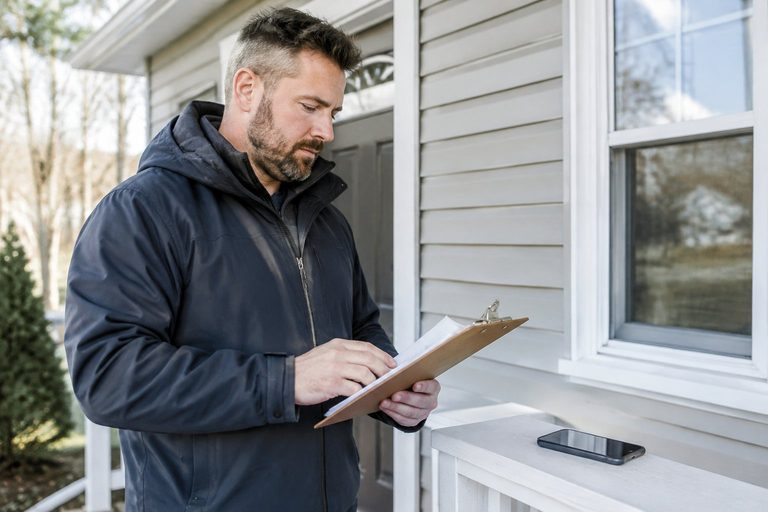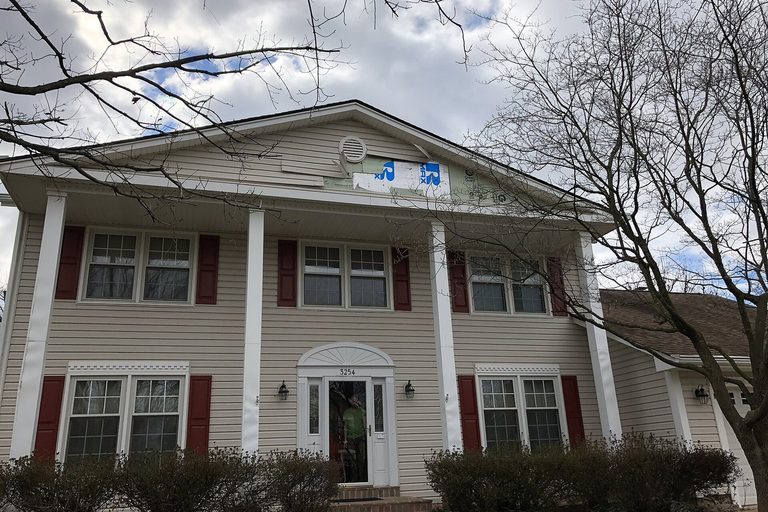


It's mid-November. You're standing in a driveway with your breath showing, and a homeowner is pointing at a cracked panel by the back door. The wind's coming up and your schedule is already full past Thanksgiving. You have to say no. You don't have to lose the job, though. Turn that no into a written spring booking: write down who they are and what the job is, give them a rough price range, and tell them the exact week you'll reach back out. Then keep that promise.
The short answer: a written list, not a promise
The fix is a list you write down, not one you keep in your head. Before you leave the driveway, get these:
- Name, phone, and address
- What the job is, in one plain line ("replace 3 cracked panels, south wall, near hose bib")
- Two or three photos
- A rough price range, labeled as an estimate
Then tell them out loud what happens next, with a date: "I'll text you the first week of March to set a day." A vague "I'll call you in spring" sounds like a brush-off. A date sounds like a plan.
Don't take a big deposit for work five months away. More on that below.
Why write it down? Because you will lose track of people you only half-promised. In November you'll remember the lady with the cracked corner post. By March you'll have three corner posts in two towns and no idea which one had the dog. Contractor-marketing sources point out that winter downtime is the right time to reach back out to customers who said no or got put off. That only works if you know who they are.
When I went from general contractor to handyman to only vinyl siding repair, the jobs got smaller and simpler. That made the list matter more, not less. Small jobs are easy to forget.
Tell them why it's a no
Give the customer the real reason. Cold-weather limits on vinyl are real, and a homeowner trusts a reason more than an excuse.
Here's what's behind it. Cold makes vinyl brittle and prone to cracking. At low temperatures it can crack right when you nail it. One repair guide says the ideal is to do panel repairs above 50 degrees. Installation guidance from the Vinyl Siding Institute, as posted by Polymeric Exteriors, says that below 40°F you should leave more room at openings and stops: 3/8 inch instead of 1/4 inch. Vinyl moves with temperature, and panels you hang in the cold will be living through a summer.
So say it plainly: "Vinyl gets brittle when it's this cold. If I snap in new panels now, I risk cracking them or the ones next to them. It'll be a better job in spring."
There's one exception. If the damage is letting water in, don't leave them waiting five months. Fix the leak or water problem now, or at least cover it so it holds through winter, and save the cosmetic work for spring. That way they don't spend the winter with water in the wall, and you get booked for the rest of the job.
What to collect and what to keep out of the contract
Collect the basics: name, phone, address, photos, the job, and their OK to text them. Get that OK in writing. A signed line on your estimate sheet works, or a text from them saying "yes, text me." You'll need it in the next section.
What you should hold off on collecting is money.
If you do take a deposit to hold a spring spot, keep it small and keep it legal for your state. States set limits, and the limits differ. Two examples:
- California: the Contractors State License Board says a home improvement down payment can't be more than $1,000 or 10 percent of the contract price, whichever is less. That applies to contracts over $500.
- Maryland: a deposit of more than one-third of the contract price isn't allowed at or before signing, unless a bond is provided.
Those are just two states. Check your own state's contractor licensing board before you take a dime, because these rules change and some states have none at all. Licensing and insurance have their own articles on this site. Here, the point is to know your deposit limit before you're standing in the driveway.
Put one more line on the paper: "This price is an estimate and may change by spring." Material costs move. Damage spreads over a winter. A crack in November can be a missing panel by March.
Here's why the money part matters. In Knoxville, a couple paid a $13,000 deposit in April 2022 on a $42,900 sunroom job. By December, no work had started, and they were telling their story to the local news. That's an extreme case and a bigger job than anything we do. But a deposit taken with no start date is the same setup on any job. On a repair that averaged about $350 on my mix, holding someone's money all winter isn't worth the risk to your name.
Staying in touch without annoying them
You've got the list and the written OK to text. Now plan the contact. Keep it light:
- One check-in in January or February. Short and friendly: "Still have you down for the panel repair. I'll reach out the first week of March to set a day."
- The spring call or text, right when you said it would come.
That's it. Two touches over a whole winter isn't pestering.
Texts and emails each come with rules, and they're worth knowing:
- Texts: Marketing texts need prior written consent and a way to opt out, like replying STOP. A common guideline is to text only between 8am and 9pm in their time zone. If someone replies "stop," "cancel," "unsubscribe," or anything like it, take them off the list and don't text again. Texting rules have been in flux in the courts and at the FCC, so the safe habit is simple: get written OK, offer a way out, and honor it right away.
- Emails: If an email is commercial, the CAN-SPAM Act says it needs a clear way to opt out, your valid mailing address, and a clear statement that it's an ad. Opt-outs have to be honored within 10 business days. The FTC lists penalties of up to $53,088 for each email that breaks the law. A personal one-on-one reply about a quote they asked for may not count as commercial, but don't bet on it. Add your address and an opt-out line anyway. It costs you nothing.
On timing, Jobber's quote follow-up guide says to follow up 2 to 3 days after your first message. If a second follow-up gets no answer, "it may be time to move on." That works for spring too. Keep every message short, with one clear next step: a date, a yes/no question, or "reply with a good day."
Tools and a simple system
You don't need software to start. A spreadsheet works, and so does a notebook in the truck. Each row is one customer: name, phone, address, town, job, photo link, price range, date promised, date of the check-in, and status.
Two habits make the list pay off:
Sort it by town or job type. In March you don't want to drive across the county for one J-channel and back again for another. Group the jobs that sit near each other and book them on the same day. With 1–3 hour jobs, a tight route can mean two or three stops in a day instead of one.
Mark everyone with one of three tags: - Confirmed: they answered and want a date - Maybe: they answered but are waiting on something - Dropped: no answer after two tries, said no, or asked you to stop
If you'd rather automate it, Jobber has quote follow-ups built in. They need the Connect plan or higher, and a quote you sent by text gets its follow-up by text. Jobber's own guide tells of a contractor who texted an old quote list and "closed $100K." That's a vendor's sales story, not a promise. The idea underneath it holds up, though: an old list nobody has called is worth nothing.
When spring comes: the call script and what to expect
When the weather turns, work the list in the order people asked. The customer you turned away first in November gets called first in March. It's fair, and they'll notice.
A simple script:
"Hi, this is [your name] with [business]. I looked at your siding back in November, the cracked panels by the back door. I said I'd reach out first week of March, so here I am. Is that still something you need done?"
If yes: - Re-confirm the scope. Ask if anything's changed. Winter wind and ice can make a small job bigger, so look again before you quote. - Re-quote at current prices. You told them in November it was an estimate. Now you give the real number. - Set a day.
If they don't answer after two tries, mark them dropped and move on.
Expect some to have hired someone else, fixed it themselves, or sold the house. That's normal. It doesn't mean you did anything wrong, so don't take it personally. You gave them a real reason, a date, and a fair price, and you didn't sit on their money. The ones who say yes become spring work you didn't have to go find, and you can fill some of your first warm weeks before the phone starts ringing on its own.
Sources (11)
- Contractor Accelerator: How to Turn Winter Downtime Into Spring Projects
- Jobber Academy: How to Follow Up on a Quote
- Polymeric Exteriors: Installation Tips and Tricks
- PJ Fitzpatrick: How to Fix Missing Siding Panels
- Old Farmer's Almanac: Don't Install Vinyl Siding During Periods When…
- California CSLB: Home Improvement Contracts Consumer Guide
- Maryland General Assembly: HB 1499 (2026)
- WATE: Knoxville Couple Left Waiting After Costly Deposit for New Sunroom
- FTC: CAN-SPAM Act Compliance Guide for Business
- Infobip: TCPA Compliance for SMS
- Kelley Drye: FCC Issues One-Year Limited Waiver of New TCPA Consent Revocation Rule
Photo: Grey Gardens (2009) by taberandrew, BY 2.0.