Price storm work the same way you price every other siding repair: your minimum charge, plus per-panel or per-wall labor, plus adders for height, color matching and extra trips. Add a separate line for an emergency "secure it" visit if you make one. Don't raise your prices because the phone is ringing, and don't drop them to beat the guys who just rolled into town. When insurance is paying, the price stays the same. You only change how you write it up, so an adjuster can read it line by line.
The rest of this post covers how to build that number, how to write it for the two kinds of storm customer, and the state laws that can get you fined.
Two kinds of storm customer
After a fall windstorm you'll get two kinds of calls, and they need different paperwork.
The cash customer. A few panels unlocked on the windward wall, a corner post cap gone, a piece of fascia wrap flapping. The bill comes in under the homeowner's deductible, so nobody calls the insurance company. Most of your storm work looks like this, and it's the same job as any wind-blown or unlocked panel repair. Quote it on the spot, on one page.
The insurance customer. A whole elevation got stripped, or a tree limb punched through two courses and the J-channel around a window. The homeowner has a claim open or is about to open one. Your price is the same, but your estimate has to stand up next to the adjuster's.
Ask on the first phone call which one it is. "Are you going through insurance on this, or just want it fixed?" tells you what paperwork to bring. The rest of the phone-call qualifying routine still applies.
Building the number
Start from what you already charge. Storm work isn't a separate price list. It's your normal price list plus a couple of extra lines.
- Minimum charge. It covers the drive, the setup and the ladder before a single panel moves. A blown-off piece of starter strip still costs you a trip. If you haven't set one yet, read the minimum charge piece first.
- Labor by the piece or by the wall. Re-locking unlocked panels goes fast. Replacing cracked or missing panels takes longer, because you're unzipping courses above to reach the nails. Price re-locks and replacements as separate lines.
- Height. Second-story gable work off a 28-foot extension ladder or staging is slower and riskier than first-floor work. Charge for it on its own line so the customer can see why the back gable costs more than the front porch wall.
- Matching. If you have to dig for a discontinued profile or a faded color, that's real time. Write it in. See matching discontinued vinyl and matching a faded panel.
- Return trip. If the panel has to be ordered, you're coming back. Charge for the second trip or roll it into the job, but don't eat it.
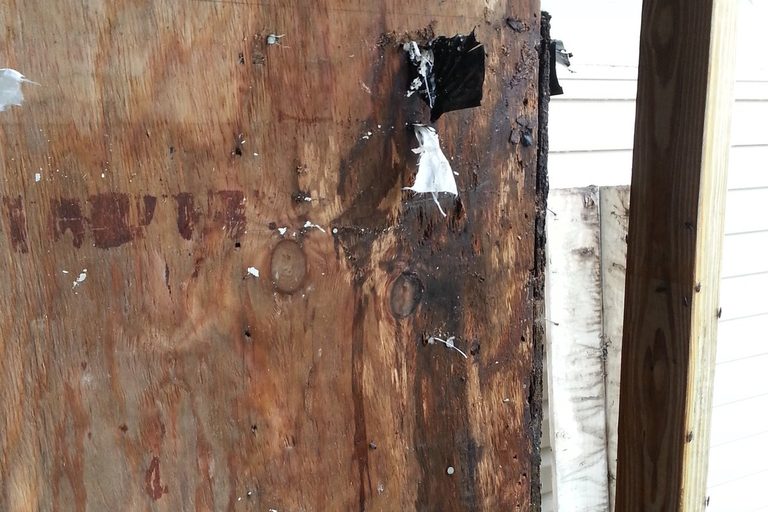
- Rot and sheathing. Wind loves to expose bad sheathing. Price it as a separate line or as a not-to-exceed allowance, the way the rot quote article lays it out.
On a site-wide average ticket of around $350, a typical storm call (a dozen unlocked panels re-hung and two cracked pieces replaced from truck stock) lands right in that range. A full stripped gable with ordered material and a return trip runs well past it. Neither one needs a special storm price.
The emergency "secure it" visit
Sometimes the right first move is to stop the damage, not fix it. Tack loose panels back on, screw down a flapping piece of trim, cover an open wall with house wrap or a tarp so the rain stays out until material arrives.
Make that its own line, and say on the invoice that it's temporary. Set the price at your minimum charge plus material, and charge more for after-dark or weekend calls. Write "temporary weather protection, permanent repair to follow" on it. If an insurance claim is open, the homeowner sends the adjuster that line too, because most policies expect the owner to protect the house from further damage.
Don't let the secure-it visit turn into free work you hope to make back on the repair. Some of those homeowners will pick someone else for the real job.
Writing it so an adjuster can read it
Most insurance adjusters price exterior work in Xactimate, Verisk's estimating software. Verisk says its price lists are researched by market and updated monthly, sometimes biweekly during demand surges, and each list is tied to a ZIP code area. You don't need to buy Xactimate to do repair work. You just need to write in units the adjuster can line up against theirs:
- Remove and replace siding, by square foot or by piece, with the profile named (double 4, D5 Dutch lap, and so on)
- Re-lock or re-hang existing panels, by piece
- Trim pieces, by linear foot (J-channel, outside corner, starter)
- House wrap, if exposed and torn
- Height or steep-access charge
- Debris haul-off
- The matching problem, stated plainly: "Color/profile no longer made. Closest available does not match adjacent wall."
That last line matters. If the adjuster prices three panels and you can't match them, the homeowner needs to know before you start. Point them to the insurance terms in plain English and let them have that talk with their carrier.
Attach photos to every insurance estimate: the whole wall, then close-ups, shot before you touch anything. The photo report method works here as-is.
*Inside Siding Pro, members can post real storm estimates and get them checked before they go to the customer. If you want a second set of eyes on your next one, come see the room.*
What you can't do: the laws that bite
Storm work is where state regulators go looking for contractors. A few rules come up again and again.
Don't negotiate the claim. You can hand the homeowner your estimate and photos. In many states you cannot argue the claim with the insurer for them unless you hold a public adjuster license, and some states bar you from doing both jobs on the same house even with one. Texas says a contractor may not act as a public adjuster on a property it's working on, or advertise to. Your estimate speaks for itself. The homeowner handles the claim.
Don't waive, eat or "cover" the deductible. Texas made this illegal in 2019 under Insurance Code 707, and contracts of $1,000 or more paid with insurance money have to state that the homeowner owes the deductible. Minnesota's statute 325E.66 bans the same thing on storm work and requires a written notice in the estimate. Even where it isn't spelled out, padding the claim to cover a deductible can land you in insurance fraud territory.
Expect a cancellation right on insurance jobs. Minnesota lets a homeowner who signed a roofing or siding contract to be paid with insurance money cancel within 72 hours of being told the claim was denied. Don't order special material on an insurance job until the claim is approved or the customer agrees in writing to pay cash.
Carry cancellation forms if you knock doors. The FTC's Cooling-Off Rule covers sales of $25 or more made at the buyer's home. The buyer gets until midnight of the third business day to cancel, and you have to give them the notice and the form. It doesn't cover a repair the homeowner called you out for, but it does cover the job you sold by knocking on the neighbor's door after the storm. If you're door-knocking the street, bring the forms.
Don't surge-price after a declared emergency. The National Conference of State Legislatures counts 39 states plus D.C. and several territories with price-gouging laws tied to a declared disaster or emergency. Charging what you charged last month keeps you clear, and it's the price your repeat customers expect anyway.
These rules vary a lot from state to state, and some cities pile on registration or permit rules after a big storm. Check your state's rules (the insurance department and the attorney general's site are the places to look) before you write your first insurance estimate.
Deposits and the backlog
After a big wind event, suppliers run short on common colors and accessories. If you're ordering material, take a deposit that covers it, especially on discontinued or special-order profiles. Put the expected lead time in writing so nobody calls you every day. The supplier lead-time piece has wording you can use.
Work the list in order: secure-it calls first, then cash repairs you can finish from truck stock, then insurance jobs as approvals come in. Fall storms run right into the first freezes, and vinyl gets brittle in the cold, so the what-can-wait-until-spring guide helps you decide which jobs to push.
Before you quote your next storm call
- Ask on the phone: cash or insurance?
- Start from your minimum charge and normal per-piece prices. No storm markup.
- Separate lines for re-locks, replacements, height, matching, return trip and rot.
- Secure-it visit billed on its own, marked temporary.
- Insurance jobs: named profile, units an adjuster uses, before photos, the matching problem in writing.
- Never touch the deductible, and never argue the claim.
- No special-order material until the claim is approved or the customer signs for cash.
- Cancellation forms in the truck if you're knocking doors.
Sources (5)
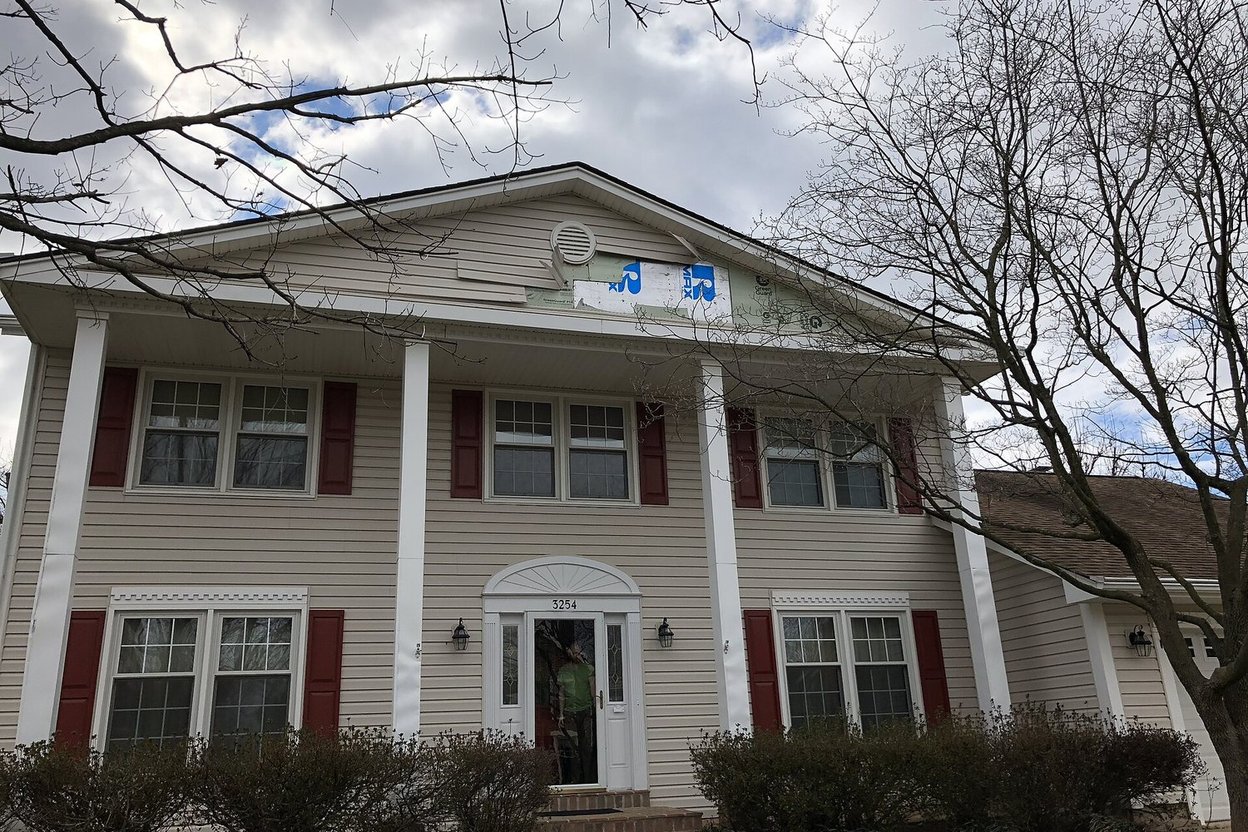
Photo: 2018-03-02 11 58 49 Siding damaged by high winds on a house along Kinross Circle by Famartin, CC BY-SA 4.0.