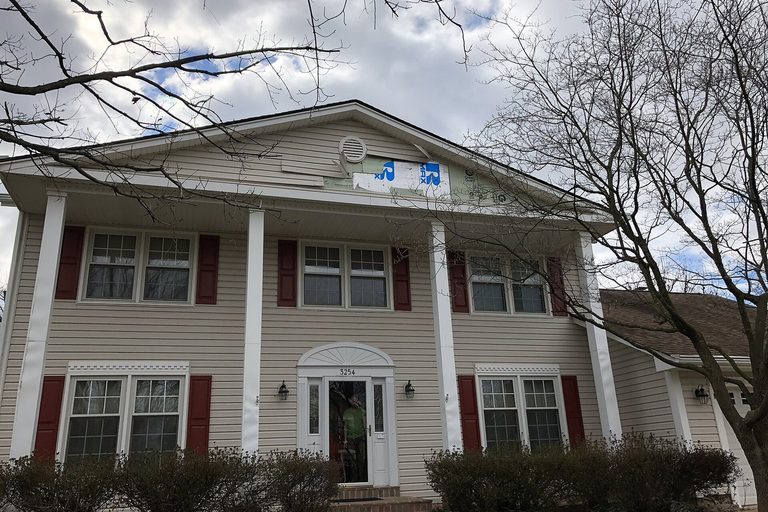


A homeowner wants a few courses of siding replaced on the side of the house that took the wind. The color isn't on the shelf, so it has to be ordered. You're standing in the driveway doing the math. If you buy it and they back out, that siding sits in your truck. So do you ask for money first? Usually yes, if the material is hard to return and your state allows a deposit. The rest of this article covers how to size that deposit, write it up and order in the right sequence.
Yes, when the material risk justifies it and your state allows it
My answer is to take a lawful deposit before you buy siding you can't easily return or use on another job. That's a judgment call about your own risk. It isn't a rule every contractor has to follow.
Repair work runs on small numbers. My average ticket was about $350 a repair, and that's just my own mix, not a figure to expect where you live. On a job that size, one special-order box nobody pays for can wipe out the profit on several jobs. When you're running one truck, every dollar sitting in unused stock is a dollar you can't spend running the business.
Sometimes you don't need a deposit at all. Say the repair uses cheap white stock you'd use on next week's job anyway. Collecting the full amount when the work is done is a reasonable choice there, and it keeps things simple for the customer.
When you do take a deposit, it isn't an extra fee. It's part of the agreed price, and it comes off the balance the customer owes at the end.
Find out what you are actually committing to buy
Get a written quote from your supplier before you decide on a deposit amount. The quote tells you what you're risking. It should cover:
- Exact product and brand
- Profile and exposure
- Color
- Quantity
- Order minimum
- Tax
- Delivery charge
- Availability and lead time
- Cancellation terms
- Return terms
Next, have the customer approve that specific material in writing: product, profile and color. If they say "that's not the gray I meant" after it arrives, you have nothing to show them.
Never assume you can return the material. Sherwood Lumber's policy says special-order siding can't be returned, and whether you can cancel a special order depends on the vendor's restrictions. Style Crest says it won't take back products your local facility doesn't stock. Even approved returns carry a 15% restocking fee, the material has to be in resalable condition, and you pay the return freight. Those are just two suppliers, and their terms can change. Yours may be stricter or looser. Ask them and get the answer in writing.
The supplier's return policy and the customer's right to cancel are separate issues. The supplier's policy decides what you can send back. The law decides whether the customer can walk away. One doesn't change the other.
Set the amount under your state's rules
There's no standard national deposit percentage. The rules are set state by state, and they differ a lot. These three examples show how much. They don't cover every state.
California. For an ordinary home-improvement contract, the down payment can't be more than $1,000 or 10% of the contract price (not counting finance charges), whichever is less. The Contractors State License Board says outright that special-order materials don't create an exception. The board also says that apart from the down payment, you can't collect for work that isn't done or for materials that haven't been delivered. Placing the order doesn't give you grounds for a second payment.
Massachusetts. This state handles special orders differently. Under the residential contracting statute, the advance deposit can't be more than one-third of the contract price or the actual cost of special-order or custom materials that have to be ordered ahead to keep the job on schedule, whichever is greater. If the material qualifies, the cap can be higher.
New York. The amount is only one part of the rules. The state attorney general says progress payments have to be held in escrow and used only for that project. Withdrawals have to be reasonably tied to completed work, unless the contractor has the bond protection the guidance describes. Taking a legal amount isn't enough. How you handle the money matters too.
Check with your state's contractor board or consumer protection office before you settle on a deposit policy. If your state isn't listed here, don't assume it lets you take whatever you want. Calling the money a "materials payment" doesn't change anything either. If the law caps the deposit, that cap covers whatever you call it. Licensing and insurance are a separate subject with their own article.
Get the agreement signed before collecting and ordering
Put the job in writing before any money changes hands. On a small repair the scope can fit on one page, but it should include:
- The repair area, like "left side, lower four courses between the corner post and the dryer vent"
- The specified siding: product, profile, color
- The total price
- The deposit amount and a line saying it counts toward the total
- The remaining payments and when each one is due
- The expected schedule
- How changes will be handled
California's CSLB recommends detailed material specifications and a written payment schedule. It also says any change to price or scope needs a written change order signed by both parties before the change happens. In Massachusetts, covered contracts must describe the work, the materials, the total price and the payment amounts. Those rules apply in those two states, but they're good practice anywhere.
Tell the customer in plain words what the deposit pays for. Something like: "This holds your order for the siding we picked, and it comes off your final bill." Write down that they approved the material. Give them a receipt for the deposit.
Write cancellation terms that follow your state's law. Don't stamp "nonrefundable" on everything. The next section explains why a word like that may mean nothing.
Check cancellation rights before placing an irreversible order
The FTC's Cooling-Off Rule covers some sales made in the customer's home, along with certain other sales. For a covered sale, the buyer can cancel until midnight of the third business day after the sale. You have to give them a contract or receipt and two copies of a cancellation form. They can cancel without penalty, and the rule doesn't allow any contract clause that waives that right. A "nonrefundable" deposit doesn't override it.
The FTC lists exceptions, including emergency sales, sales done entirely online, by phone or by mail, and repairs to personal property that the customer requested. Don't assume every repair you're asked to do falls under that last one. The FTC's explanation doesn't say a requested siding repair qualifies, and siding is attached to the house. If you aren't sure whether a job is covered, act as though it is, or ask your state agency or a lawyer. Your state may have its own cancellation rules on top of the federal one.
In practice, wait until any cancellation period has run out before you order material you can't send back. That might push the order back a few days. That's a small cost. If the customer cancels legally, you still have to refund them under the law, even if your supplier won't take the siding back. You'll have paid for material you can't return and lost the deposit too.
Use a repeatable process you can explain calmly
Use the same steps on every job:
- Confirm the material and get the supplier's terms in writing.
- Check your state's deposit, handling and cancellation rules.
- Sign the agreement.
- Collect a deposit your state allows and give a receipt.
- Wait out any cancellation period that applies.
- Place the order.
- Keep the order confirmation.
- Collect the remaining payments at the agreed points your state allows. New York's attorney general advises customers to hold the final payment until the job is finished, so expect that.
When a customer asks why, keep it short: "Before I order, I confirm the siding and put the payment terms in writing." Most people take that well.
Plans do change. One anonymous handyman on Reddit said a customer postponed a fencing job after he'd already bought the materials. That's one story from a different trade and doesn't show how often siding jobs get canceled. Still, it's easy to picture the same thing on a siding repair, especially in fall when people's budgets get tight before Thanksgiving. Following the same steps every time keeps your cash and your customers protected.
Sources (9)
- Sherwood Lumber – Exterior Return Policy
- Style Crest – Customer Service Policies
- California CSLB – What Is a Home Improvement Contract
- California CSLB – Progress Payment Restrictions Bulletin
- Massachusetts General Laws, Chapter 142A, Section 2
- New York Attorney General – Hiring a Home Improvement Contractor
- FTC – Buyer's Remorse: The FTC's Cooling-Off Rule
- 16 CFR § 429.1 (Cornell LII)
- Reddit r/handyman – Do you charge deposits?