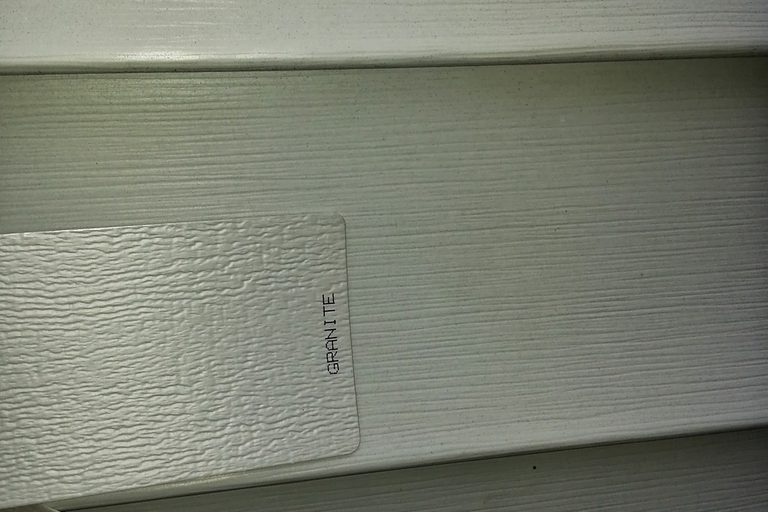
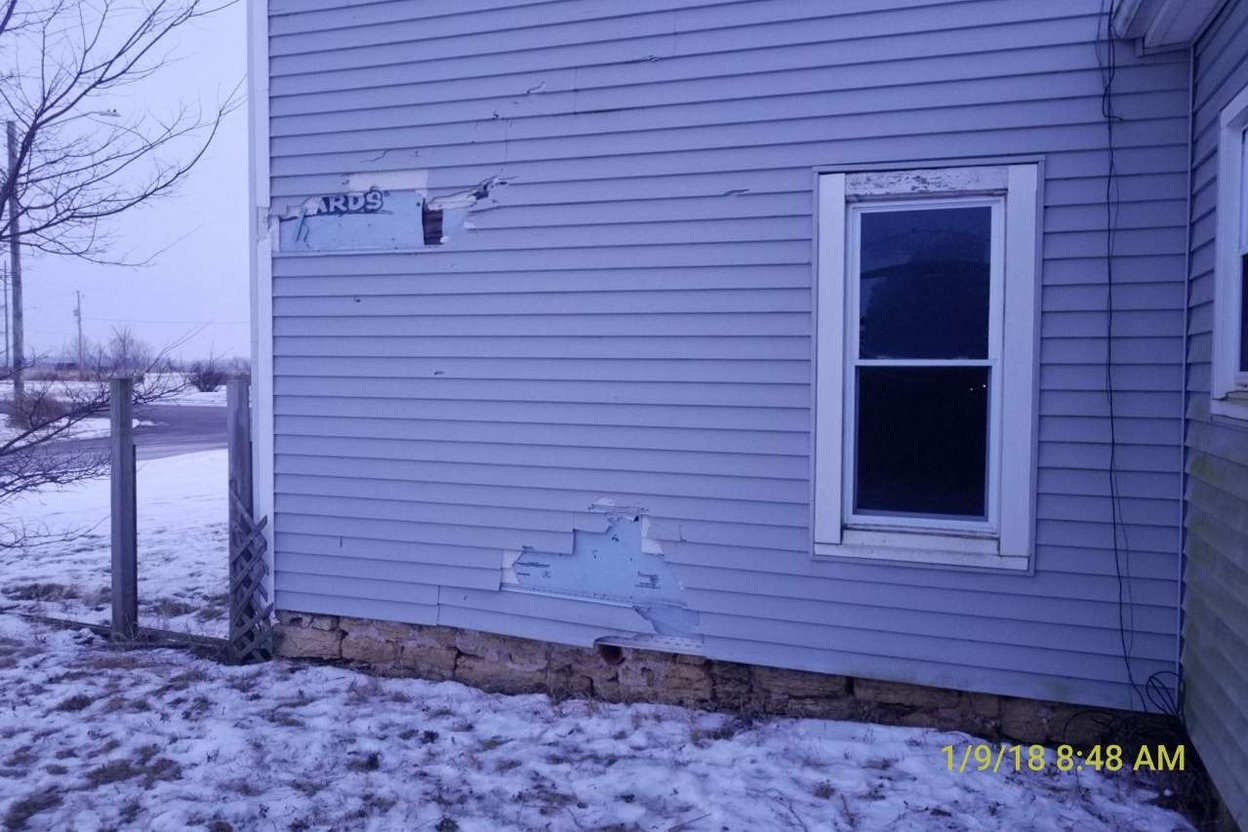

You've pulled a cracked panel off a wall, looked at the back, and known nobody stocks that profile or color anymore. Someone told you to get a letter from the supply house saying it's discontinued and the insurance company will pay to match the wall. Here's the straight answer: no carrier, regulator or trade group publishes a rule that says "send us two letters" or "send us three." There's no number to hit. What does matter is that a single letter saying "it's discontinued" is easy for an adjuster to set aside. Several different kinds of proof that all agree are much harder to ignore.
The short answer: there's no number, but a file beats a letter
If someone tells you carriers "now want three letters," ask where that's written. There's no public standard I know of that sets a count. Adjusters work from the policy, their company's guidelines and their state's rules, and none of those that I've seen asks for a set number of letters.
What the people who fight these claims for a living say is this: don't just say it, prove it. One Illinois claims-help firm said it plainly. The strongest file "does not simply say 'this siding is discontinued.' It proves it."
A manufacturer's discontinuation letter is still worth having. A siding-supplement firm describes it as the paper that "confirms that the specific product is no longer available," and says it keeps a library of those letters for common profiles. So the letter isn't useless. It's one piece. The question isn't how many letters you have. It's how many different kinds of proof you have, and whether they all point the same way.
What counts as proof that siding is discontinued
Here's the list that same Illinois firm gives as acceptable proof:
- A written statement from the distributor
- A manufacturer availability letter
- A supplier email confirming the product is discontinued
- Photos
- Color and exposure records
- Original construction records, if the owner has them
- A contractor report explaining why the panels you can buy today don't match
- An ITEL or similar siding identification report
Look at what that list covers. The distributor and manufacturer cover availability. The photos and color records cover what's actually on the wall. Your report covers the trade side: why a near-match panel won't lock in, won't line up at the exposure, or will stand out next to 15-year-old faded vinyl.
The supplement guide adds detail on photos: every side of the house from more than one angle, close-ups with something in the frame for scale, new samples held up against the weathered siding, and measurements for each side.
Then there's the ITEL report. ITEL is a lab that identifies building materials from a sample. For siding, the sample is typically a 12-inch piece. The supplement firm puts the cost of a test at $200 to $400 and says it can be billed as a testing expense. That's one firm's figure, so check with your own carrier and region. A lot of contractors treat the ITEL report as the knockout punch. Sometimes it is. Sometimes it's the thing that sinks the claim.
How an ITEL report can work against you
ITEL says its material matching finds the "closest available match," so a repair can go ahead instead of a full replacement when the damage is limited to one area. That's straight from how the service describes itself. Results usually come back within minutes.
Read that again from the adjuster's side. If the report says your Dutch lap is discontinued but names a "closest available match," the adjuster now has a product name to price. The scope can shrink from "re-side the whole wall" to "patch six panels with the close match." Your letter said discontinued. The report said discontinued, plus here's what to use instead.
It goes further. One of ITEL's own sample reports shows a product listed as "discontinued" that was still available through a salvage supplier, Discontinued Materials, Inc. So "discontinued" and "can't be found anywhere" aren't the same thing, and an adjuster knows that.
An Ohio claims firm tells homeowners to ask for the complete ITEL report, not a summary line. It gives a list of written questions to ask, including who ordered the report, what sample was sent in, and whether the pricing includes labor and overhead. If you're the contractor on the job, make sure the owner knows they can ask for the full report.
Matching rules depend on the state
Even with a perfect file, what the carrier owes depends on where the house is. The NAIC, the national group of state insurance regulators, added a matching section to its model claims regulation in 1990. It says the insured shouldn't pay anything beyond the deductible to get a reasonably uniform result. But it's a model. Each state decides whether to adopt it and how to word it, and they haven't done it the same way.
A 2016 chart from FC&S listed ten states with matching regulations: Alaska, California, Connecticut, Florida, Iowa, Kentucky, Nebraska, Ohio, Rhode Island and Utah. The same chart listed Minnesota and Missouri as having none. That chart is ten years old, so treat it as a starting point, not current law.
The wording matters too:
- Ohio asks for a "reasonably comparable appearance."
- Iowa asks for a "reasonably uniform appearance within the same line of sight." That raises the question of whether the back wall counts if you can't see it from the front.
- Kentucky's regulation asks for "a reasonably uniform appearance," but a federal court in 2021 ruled that a homeowner can't sue to enforce it directly.
- Illinois is generally not considered a matching state, but the Illinois firm notes matching "may still be owed" depending on the policy language and case law.
Wherever you work, look up your own state's rule before you lean on it. Your state insurance department is the place to start.
What I'd put in the file before calling the adjuster
None of this is legal advice. It's how I'd set up the paperwork so the claim doesn't fall apart on the first phone call.
- Photos before anything moves. Every side of the house, close-ups with a tape measure in the frame, and new sample panels held up against the old ones. In fall, take them before the leaves pile up against the bottom courses, and definitely before snow covers them.
- A 12-inch sample. Take it carefully, label it, and keep a piece if you can.
- The distributor in writing. An email from your supply house beats a phone call you'll have to describe later.
- The manufacturer in writing. An availability or discontinuation letter for the specific profile and color.
- The ITEL report, all of it. If one is ordered, get the complete report and read the "closest available match" line before the adjuster brings it up.
- The policy language. The owner should have it. Find what it says about matching, or "like kind and quality."
- One question, in writing. Send the adjuster something like: "Which policy language or company guideline requires more than what's in this file?" If they say one letter isn't enough, that puts it on them to show where that's written. The Ohio firm gives similar advice: ask in writing whether the policy requires "like kind and quality" or something else.
Then write your contractor report: what's damaged, what you can buy, why it won't match, and what the repair costs.
Where the contractor's job stops
My job on a claim like this is to document the damage and price the repair honestly. That's it. Whether the policy covers matching, and how much, is between the homeowner, their carrier and their state insurance department. Don't tell an owner the carrier will pay for the whole house. You don't know that, and if it doesn't happen, they'll blame you. Build a solid file, hand it over and let the coverage process run. Rules on public adjusting and contractor involvement also vary by state, so stay on the contractor side of that line.
Sources (8)
- Allied Emergency Services: Alside Charter Oak Dutch lap discontinued, Illinois siding matching claims
- IA Solutions: Siding supplement guide for contractors
- Nearmap: ITEL Now
- Keathley Claims: ITEL insurance claim material matching
- ITEL sample report (DMI)
- PropertyCasualty360 / FC&S: Matching statutes by state (2016)
- Property Insurance Coverage Law: NAIC standards require matching
- Property Insurance Coverage Law: Is matching required in Kentucky?