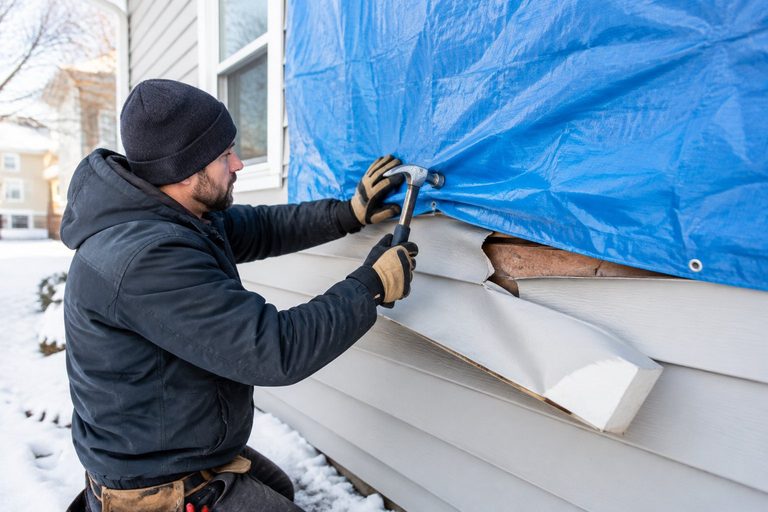

You've got a few repairs on the books for December: a storm-torn wall, a missing panel by the dryer vent, and one customer who wants it done "before the family comes." You figure you'll grab the material when you get there. Here's the short answer. Order special-order colors now, before Halloween if you can. Have stock material ordered by early December. Plan on most yards being closed Christmas Eve and Christmas Day, and some through that weekend. The closed days aren't the real danger. The lead time is.
The short answer
Supply yards don't all keep the same holiday hours. They do follow a pattern, though. Hammond Lumber, a regional yard in Maine, has every store closed Thursday, December 24 and Friday, December 25 this year. Parr Lumber in the Northwest closes for Christmas Eve, Christmas Day and New Year's Day. Kuiken Brothers in New Jersey and New York has posted hours that close the yard at noon on Christmas Eve and all day Christmas.
Losing two or three days won't sink you. The real problem is a job waiting on a special-order color that hasn't shipped yet, while the counter you need to call is dark for four days.
So here's my rule. Anything that has to be ordered gets ordered now. Anything stock gets picked up or delivered by mid-December. If you plan for late December, you're betting on the one stretch of the year when nobody's answering the phone.
What the calendar looks like in 2026
Here are the dates that matter:
- Thursday, Nov 26: Thanksgiving. Expect yards to be closed.
- Thursday, Dec 24: Christmas Eve. Closed or short hours.
- Friday, Dec 25: Christmas. Closed.
- Sat–Sun, Dec 26–27: Some yards stay closed. Hammond is closed both days this year.
- Friday, Jan 1: Closed at some yards and open at others.
Each branch sets its own hours, so call your branch. The one 20 minutes away may not keep the same hours as the one across the state.
Now count back from December 24:
- 8 weeks back is Oct 29. That's this coming week. Order long-lead special colors now.
- 4 weeks back is Nov 26, Thanksgiving. Get anything with a two-to-four-week ship time ordered the week before.
- 2 weeks back is Dec 10. Have stock material ordered or picked up by then.
- Dec 21–23: Treat these days as a cushion, not a plan.
Stock versus special order
Stock colors in common profiles are usually on the shelf or one truck away. That's the easy part. Special order is where jobs stall. One installer puts siding lead times at 4–8 weeks, depending on the product. Some specialty products run longer than that. Supplier pages hedge too. Mitten's product pages say "order quantities and lead times may vary" and send you to your local branch for numbers. Accessory makers do the same. Tapco's Foundry specialty shapes come in 10 standard colors, and anything else is a special order.
Repair work makes this tricky because you rarely get to pick the color. The house already picked it, sometimes 20 years ago. You need a match for the color, the profile and the exposure. Siding fades, so even the "right" color may not match a south wall that's been in the sun for a decade.
So do the detective work now, while it's still fall and you're up on ladders anyway:
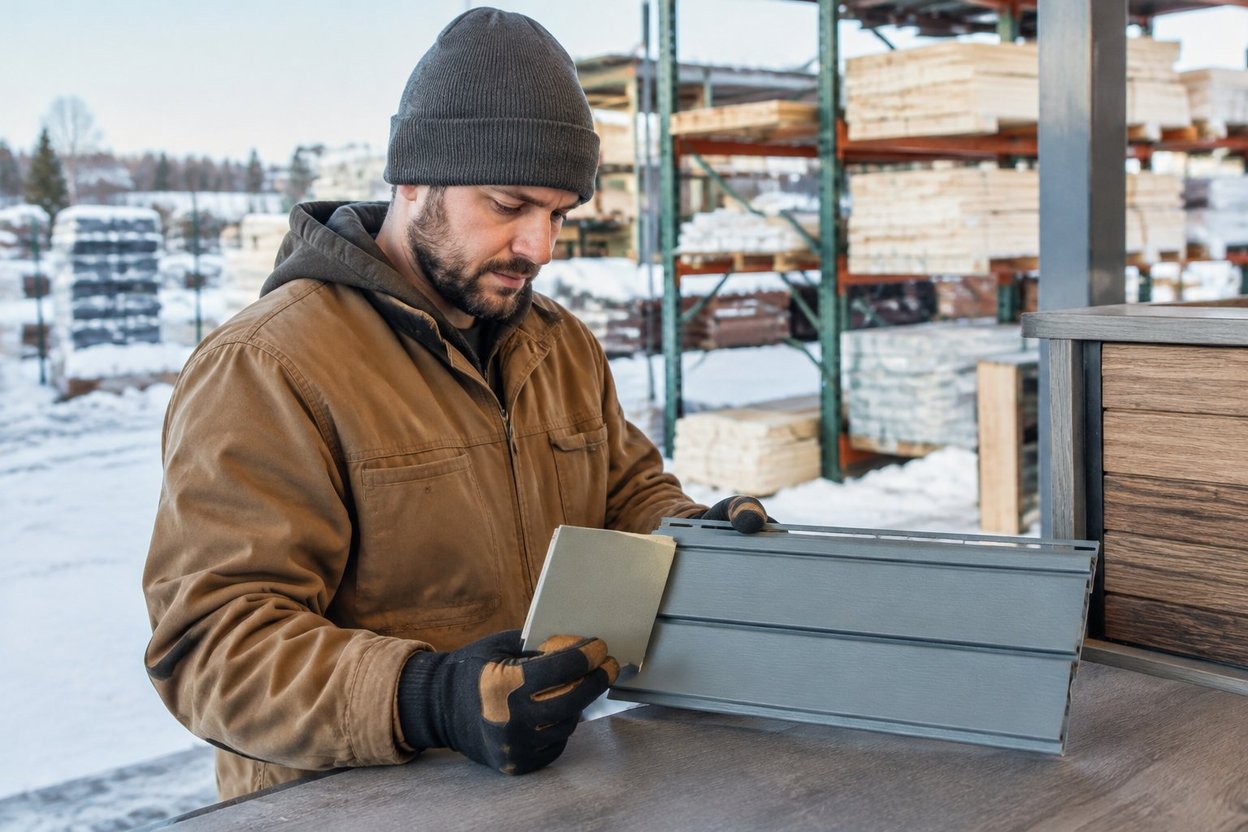
- Pull a piece from a hidden spot if you can, or look for a manufacturer stamp.
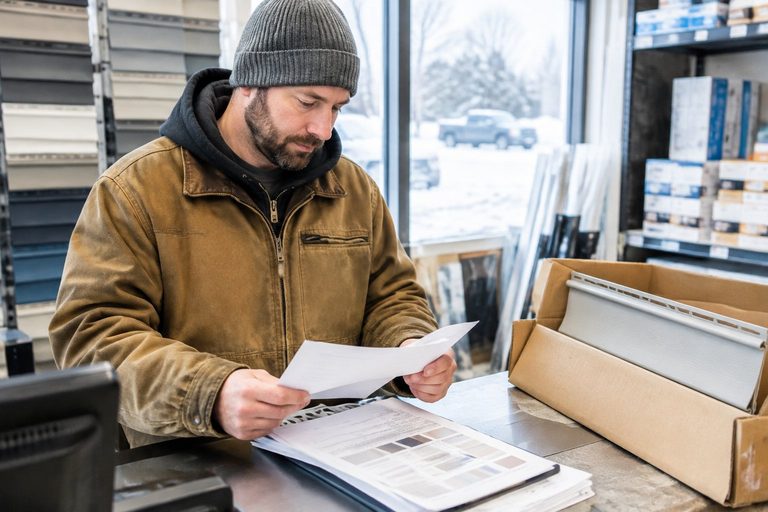
- Bring the sample to the counter. Don't try to describe it over the phone.
- Ask whether the color is stock in that profile or a special order, and how long it really takes to ship.
- Ask whether a special order can be cancelled. Some can't.
If a customer's December job depends on a special-order color, they need to hear that this week, not on December 20th.
Price moves and what they mean for a small order
Siding prices went up more than once this year. Gentek raised vinyl siding, soffit and accessories 2–4% on shipments starting March 8, 2026. CertainTeed put through about a 6% increase on vinyl, soffit and accessories this spring. Sherwood's Everlast went up about 4%.
Look at Gentek's wording: "effective with shipments." The price is often set when the material ships, not when you call. A special order placed in October that ships after an increase can cost more than your quote said.
What should a repair guy do with that?
- Ask the counter directly: "Is anything coming in January?" They usually hear about it before you do.
- Get the quote in writing with the ship date on it. Ask whether the price is locked.
- Don't stockpile on a rumor. A repair business runs on small orders. A few extra boxes of a color you might never sell again is cash sitting in your garage. Buy what's booked, plus a sensible amount extra.
A 4% or 6% increase on one repair's worth of panels isn't much money. A job that sits all winter because you waited costs you a lot more.
Cold-weather install reality
Material you order now will probably go up in the cold. In the vinyl belt, that means December and January days that start in the teens. It changes how you hang it.
Below 40°F, the minimum gap at openings and stops goes from 1/4" to 3/8". Vinyl can move half an inch or more over a 12'6" panel as the temperature swings. A panel hung tight on a cold morning will have nowhere to go in July. The other rules still apply. Leave about 1/32" (roughly a dime) between the nail head and the panel. Get at least 1-1/4" of penetration into nailable material. Space nails no more than 16" apart on horizontal panels.
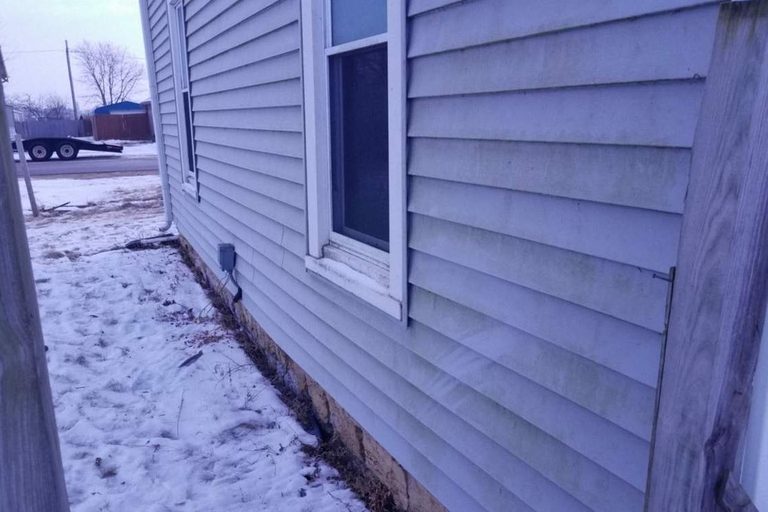
Cold vinyl is also brittle. The Old Farmer's Almanac warns against installing it when temperatures are likely to drop below freezing. Contractors set their own cutoffs. One Minneapolis remodeler stops around 20°F, and a Wisconsin contractor works down to 0°F. That's field practice, not a manufacturer rule.
Staging helps a lot:
- Store panels flat, out of the weather, and in a heated shop or garage if you have one.
- Bring only what the day needs out to the truck.
- Cut and snap-lock carefully. Cold panels crack where warm ones would just flex.
- Schedule cold jobs for midday, when it's warmest.
A repair job is usually a few hours. You can often fit one into the warm part of a cold day. You can't if the material isn't in your shop yet.
Simple checklist
Before Thanksgiving, for every winter job on the books:
- Measure the area, plus a course or two beyond the damage, for panels that won't come out clean.
- Confirm the color and profile with a physical sample at the counter.
- Ask: stock or special order? If it's special order, ask the ship date and whether you can cancel.
- Get a written quote with the ship date. Ask if the price is locked or set when it ships.
- Ask about January price increases. Then decide based on the answer, not on a rumor.
- Order extra trim, starter, J-channel and fasteners. The small parts are the ones you'll be stuck without on December 26th.
- Ask about holiday hours and will-call cutoffs for pickup, delivery and the last order date before Christmas.
- Stage the material somewhere dry and, if you can, warm.
Fifteen minutes on the phone this week can keep a job from stalling until January.
Sources (14)
- Hammond Lumber – Holiday Store Hours
- Parr Lumber – holiday closures (Salem)
- Parr Lumber – holiday closures (Ridgefield)
- Kuiken Brothers – store hours
- NOVA Exteriors (LinkedIn)
- Mitten – Oregon Pride
- JLC – Foundry Specialty Siding Shapes Collection
- Universal Supply – March Monthly Update
- Universal Supply – May Monthly Update
- Polymeric Exteriors – Installation Tips and Tricks
- Polymeric Exteriors – Cold weather installation
- Old Farmer's Almanac – Don't install vinyl siding during periods when…
- New England Today – Don't install vinyl siding when temperatures are likely to drop
- JLC – cold-weather siding practice