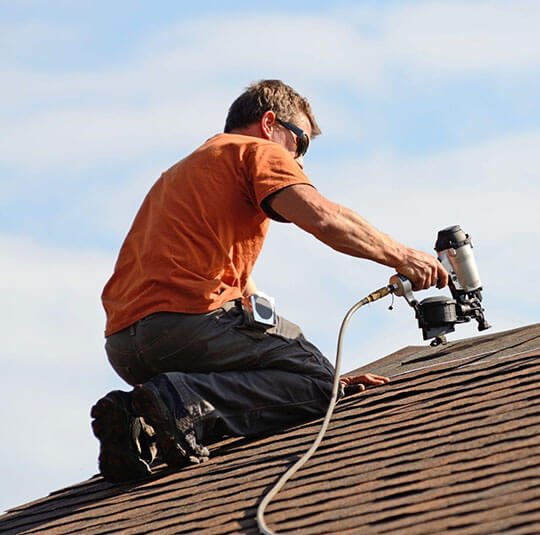
The phone rings on December 27th. You're on the couch with leftovers and the kids are home from school. A homeowner says the wind ripped a few panels off the side of the house and snow is blowing into the wall. So do you go? Yes, if water or wind is getting in, but go to make a temporary fix, not the whole repair. A cracked panel, a faded section, or a full replacement can wait until January. This article covers how to sort those calls, what the cold does to the work, how to price and paper a holiday job, and how to set your rule ahead of time.
The short answer
Take the calls, and sort them on the phone.
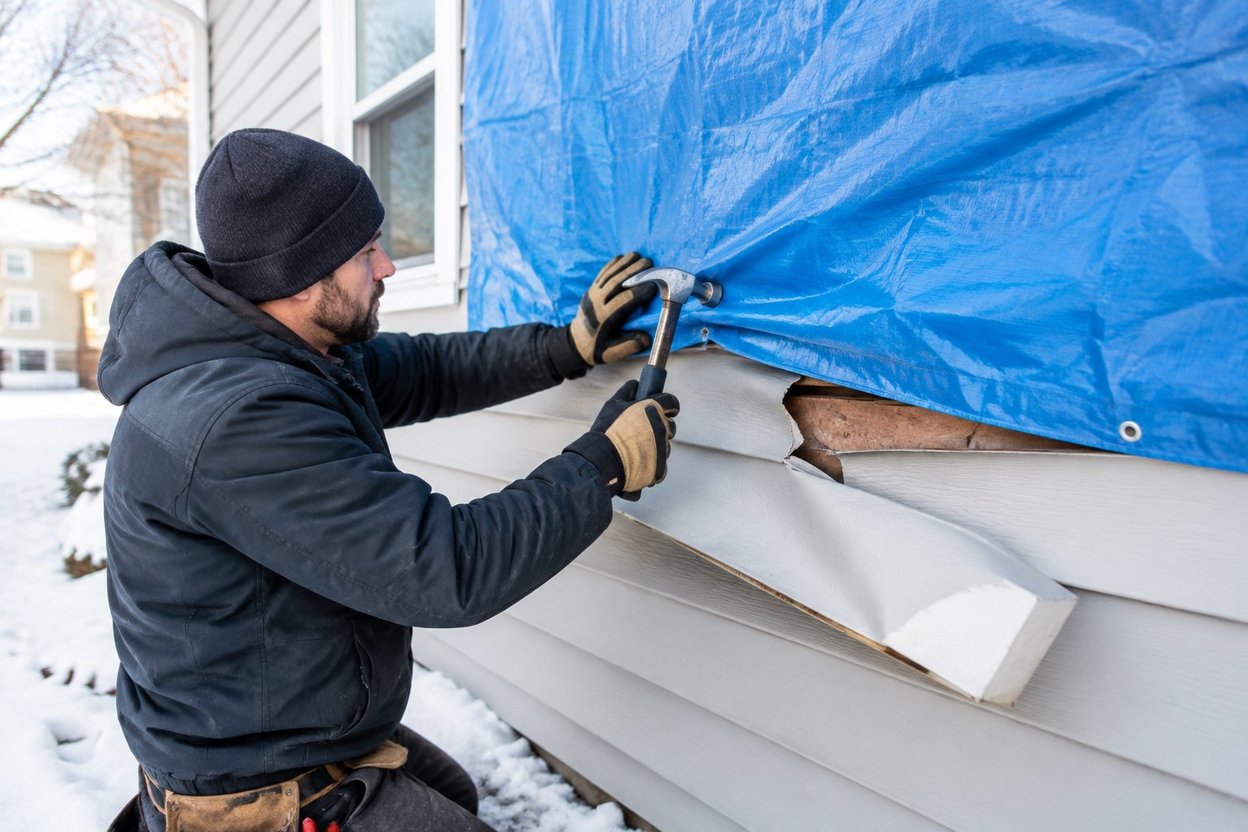
If rain, melting snow, or wind can get into the wall, that's a real problem, and it gets worse every day it sits open. Go out, close it up with a tarp, a board, or a quick patch, and book the real repair for after the first.
If the siding looks bad but the house is still sealed, it can wait. Cosmetic work and full-panel jobs belong in January, when the days are longer, the vinyl is easier to work, and you aren't missing time with your family.
Nobody has to work this week. You run your own business, and that's part of the reason you went out on your own. Losing one job hurts less than burning out in your first winter. Someone else will take that call, and plenty more will come.
One honest note: nobody keeps reliable numbers on how many siding repair calls come in between Christmas and New Year's. What follows is judgment, not statistics. Contractors don't agree on this week either. One remodeler says clients often ask for work after the first of the year, while others get last-minute calls from people who want work done before the holidays.
Sort the call: emergency or can wait
Ask what happened and what the customer can see. These count as emergencies:
- An open hole in the siding
- Missing panels with the wrap or sheathing showing
- Siding torn loose by wind and flapping, letting in rain or melting snow
These can wait:
- A cracked panel that's still in place
- A faded or discolored section
- A small dent or chip
- A "while you're out here" list of cosmetic work
Insurance gives you another reason to move fast on the real emergencies. Homeowners are generally expected to take reasonable steps to keep the damage from getting worse, and covering openings with a tarp or plastic is the typical step. If the loss itself is covered, reasonable temporary repair costs are likely covered too. Tell the customer to keep your receipt. Coverage is between them and their insurer, so don't promise anything about it.
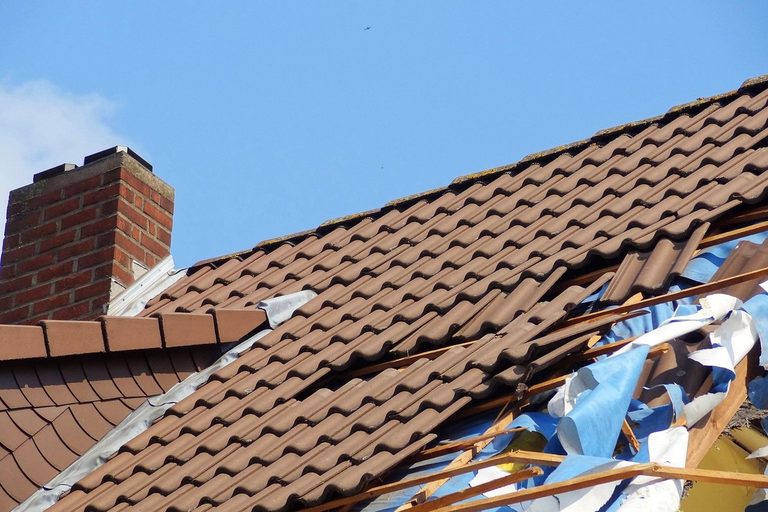
Before you touch anything, have the customer photograph all the damage. Consumer advice after storms also says to hold off on permanent repairs until the adjuster has seen it, unless the work is needed to stop more damage.
So the holiday visit is the protective fix. Tarp it, board it, or put up a temporary patch. One restoration company suggests plywood or protective boards over damaged siding to keep melting snow and rain out. Then put the permanent repair on the January calendar before you leave the driveway.
What cold does to the work
Holding off on full repairs isn't only about family time. Cold changes the material.
Vinyl gets brittle in the cold and can crack when you nail it. Installers don't agree on when to stop: one quoted in a builder's guide stops at about 20°F above zero, and another at 0°F. There's no single official cutoff. Check the manufacturer's instructions for the panel you're putting up.
Vinyl also moves with temperature, and that's where the official numbers come in. The Vinyl Siding Institute's installation quick tips say:
- Leave 1/4" clearance inside receiving channels at openings and stops.
- Increase that to 3/8" when you're installing below 40°F.
- Leave about 1/32" between the nail head and the nail hem, about the thickness of a dime. Don't drive it tight.
If you hang a panel snug on a cold day, it will buckle when summer comes. If you leave the right gap, the panel can grow into it.
The cold costs you too. Everything takes longer with gloves on, and ladders and roofs ice up. If you bring a helper, the safety rules apply. OSHA has no cold-specific standard, but employers still have a general duty to protect workers from recognized cold hazards, and OSHA treats wind chill as the measure to watch. A 25°F day with a stiff wind is a different job from a calm 25°F day. Watch the wind chill for yourself too, even when you're working alone.
Pricing and paperwork for holiday work
Charging more for holiday work is normal in the trades. The common benchmarks are about time-and-a-half after hours and double time on holidays. A city emergency rate schedule pays double for work on Christmas Day and New Year's Day. A California electricians' agreement pays double for holiday hours, including December 24th. On one electricians' forum, posters describe time-and-a-half after hours and double on holidays, and one has heard of triple time with a five-hour minimum.
Those numbers come from public rate sheets, union agreements, and other trades. They aren't siding repair prices. Use them to frame your own holiday premium, and set the rate yourself.
Whatever you charge:
- Put the rate in writing before you drive over. Text or email it, and get a yes back. That includes any minimum charge.
- Write in weather and availability terms. Clear Estimates suggests a signed contract that says what happens if weather or availability delays the work. For a temporary fix, also write down that the permanent repair is a separate job on a separate date.
- Price in the winter costs. That means longer travel on bad roads and worse fuel mileage in the cold.
- Get paid the way a clean business does. Take a card or a check and give a written receipt. Don't ask for a big cash deposit. The customer needs that receipt for the insurer, and you need it for your books.
Rules and traps for storm-time calls
The paperwork also protects your name. After storms, state attorneys general warn people about "storm chasers." Iowa's attorney general put out a typical warning. It tells homeowners to get a written contract, avoid large upfront payments, not pay by wire, gift card, crypto, or cash, and never let a contractor act as their insurance adjuster. The BBB says the same about credit cards and warns that some bad actors create damage to get work. As a new business, you want to look like the opposite of all that: written terms, no pressure, small or no deposit.
That Iowa release also notes that in most cases a customer has three business days to cancel a home repair contract. Under the federal FTC Cooling-Off Rule, a business day excludes Sundays and federal holidays, so in holiday week that window can run longer than you expect. The rule has an emergency exception, but it's narrow. The customer must have called you. The work must meet a real, immediate emergency. And the customer must hand you a dated, signed statement in their own handwriting that describes the emergency and gives up the right to cancel. Your state may add its own rules, so check them.
Some states also have price-gouging laws during declared disasters. In Iowa, the ban covers counties under a disaster proclamation, for as long as the proclamation lasts and up to six months after. Look up your own state's rule before you set a storm-week rate.
Setting your own boundaries
The best time to decide about Christmas week is now, in the fall, before Thanksgiving fills the calendar. Pick a rule ahead of time. For example:
- You take emergency calls only, meaning water or wind getting in.
- You take them on two set days, say the 27th and 30th.
- You book everything else for the first week of January.
Then put a voicemail greeting or a text auto-reply that says so. Customers usually respect a clear answer more than a maybe.
Contractors handle this week both ways. One builder takes the whole week off every year to be home with family. Another fit a few urgent jobs into two days and took the rest off. Both are fine. Repair jobs are short, mostly one to three hours, so you can do a protective fix and still be home for dinner. The January calendar tends to fill up anyway.
Sources (15)
- Fine Homebuilding forum: How busy are you?
- Clear Estimates: Taking on new projects during the holidays
- Pro Remodeler: 1-Minute Interview, Mike Shumate
- TWIA: Temporary Repairs
- KKTV: Advice following the wind storm
- ServiceMaster Restore: After a winter storm damages your roof or siding
- VSI Installation Quick Tips (PDF)
- JLC: A Builder's Guide to Vinyl Siding
- OSHA: Cold Stress Guide
- City of South Bend emergency rate schedule
- California DIR prevailing wage holiday provisions (PDF)
- Mike Holt forums: Are you paying...
- Iowa Attorney General: Storm chaser scams and price gouging
- 16 CFR 429.0, FTC Cooling-Off Rule definitions (Cornell LII)
- NKyTribune: BBB warns against storm-chasing scams