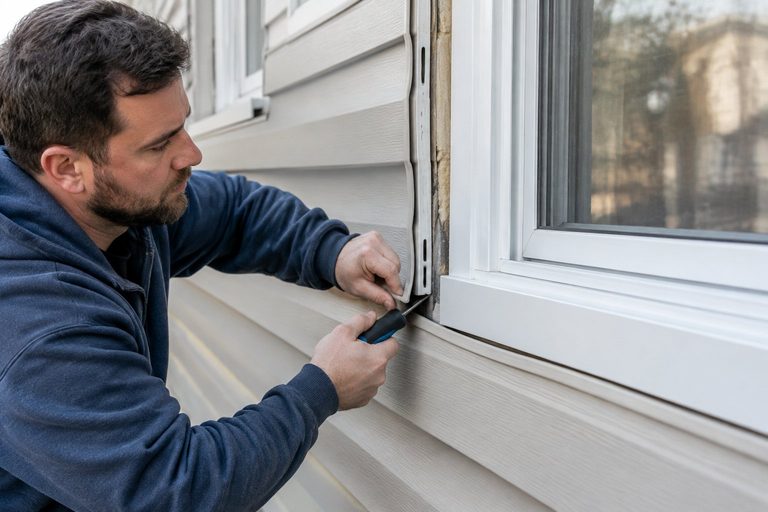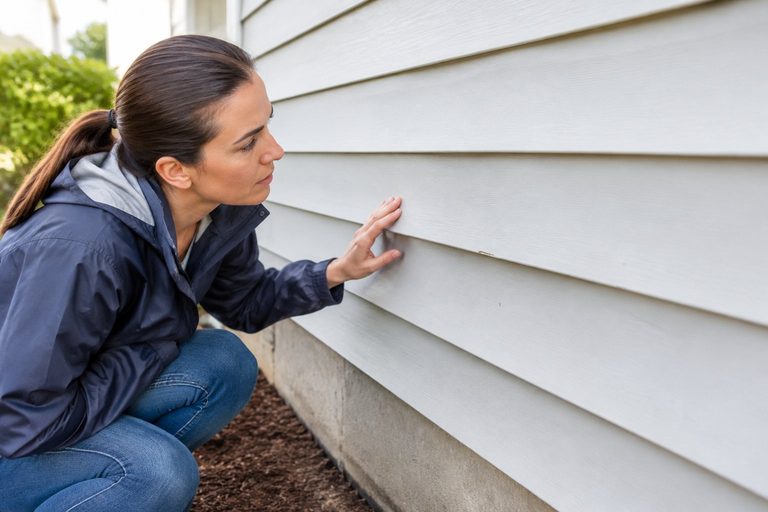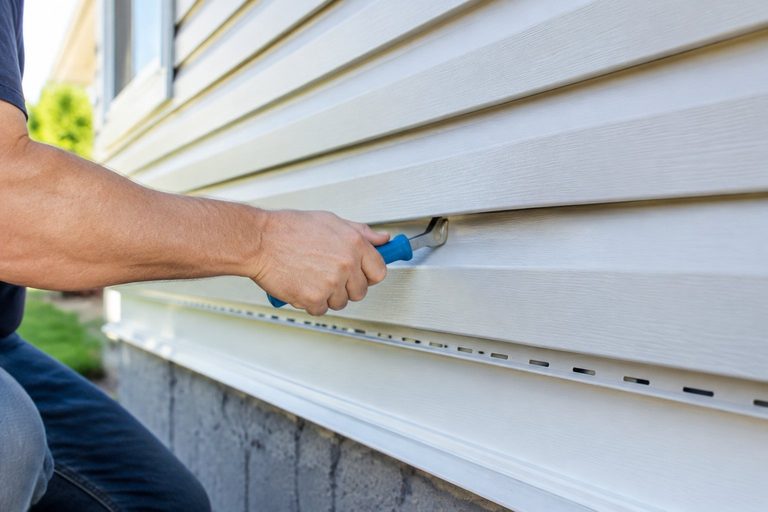
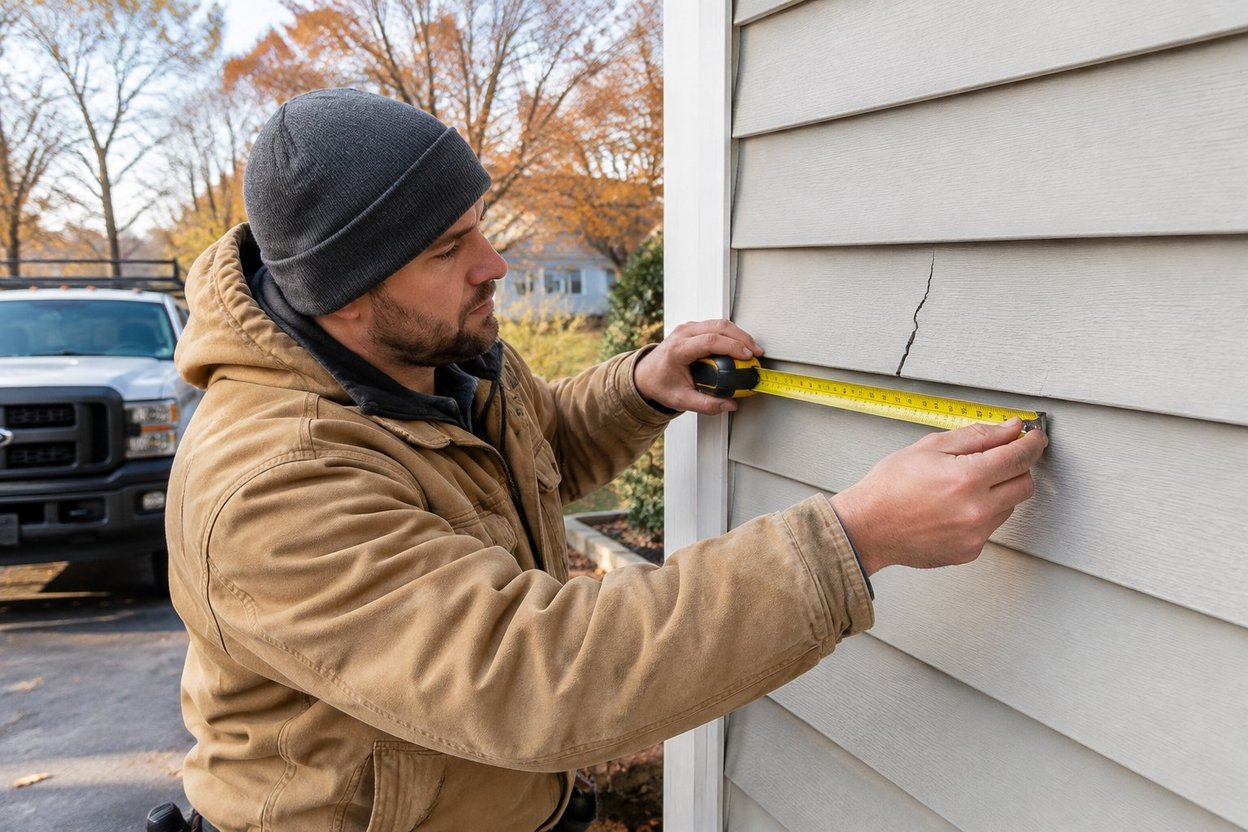

You're standing in a driveway on a cold October afternoon. You've looked at the cracked panels and the strip the wind pulled loose, and you've given the homeowner your number. They wince and say, "The last guy said he'd do it for less." You feel the pull to knock off fifty bucks and get the job. Don't. On small repair work, the cheapest price has to cover the drive, the hunt for a matching panel, the setup, the cleanup and any return trip, and usually it can't. Here's why, and here's how to price so the business keeps going.
Winning every bid is a warning sign
A full calendar feels like success. It can also hide a pricing problem.
Contractor Michael McSweeney has said that as a young painter he won about 90% of his bids, and only later figured out why: he was charging too little (ERGO NEXT). That's one man's story, but plenty of tradesmen will recognize it. When nearly everyone says yes, you're probably not better than the competition. You're probably cheaper than you need to be.
Three numbers get mixed up here:
- Revenue is what the customer pays you.
- Gross profit is what's left after the direct costs of that job: materials, labor, disposal, and the gas to get there.
- Net profit is what's left after everything else: insurance, the truck payment, the phone, advertising, the hours you spend on estimates nobody pays for, and the slow weeks.
A busy schedule only tells you about revenue. You can be booked solid and still lose money once the truck, insurance and winter are paid for.
For a sense of scale, the National Association of Home Builders reports that residential remodelers averaged a 29.9% gross profit margin and a 6.3% net profit margin in fiscal 2024. That net figure was the highest since 1996 (NAHB). Those are remodeling numbers, not siding repair numbers. But look at how little is left at the bottom even in a good year. That's not much room to start giving discounts.
Why small repairs are easy to underprice
I've worked as a general contractor with a big crew, then as a handyman with one apprentice, and then I did nothing but vinyl siding repair. Repair is a different animal from replacement. Most jobs take one to three hours, outside, with a handful of tools and one truck.
That's what makes repair a good business. It's also what makes it easy to underprice, because the hours you spend on the wall are only part of the job. On a two-hour repair, the costs you don't see can match the work itself:
- The first visit. You drive out, look, measure, figure out the profile and talk to the homeowner.
- Matching. Finding a panel that fits the profile and comes close to a faded color can take longer than the repair. Discontinued profiles and faded colors are known problems in section repairs, and sometimes no match exists and a whole side of the house has to be redone (Staxen).
- Travel and setup. Ladders, staging and tools go up and come down whether the job takes forty minutes or four hours.
- Removal and disposal. Estimating guides for siding say to price tear-off and disposal as their own line, not bury them (Hover). On a repair the pile is small, but getting rid of it still costs you time and a dump run.
- Paperwork. The estimate, the invoice, the photos, the texts back and forth.
- Return trips. A panel that's back-ordered, a homeowner who wants one more spot looked at, or a callback.
When the homeowner looks up siding prices online, they find replacement prices per square, the industry unit for 100 square feet of wall (Piecework Pro), or supplier tables that list material only, with no labor, disposal, equipment or markup (Staxen). None of that is what a repair costs. A replacement crew spreads its setup across thousands of square feet. You spread yours across one wall section. Don't let anyone, including yourself, price a repair off a replacement number.
Fill in your own repair price
You need your own numbers, not mine and not a website's. Take a typical repair and fill this in:
- Materials and matching: panels, trim, fasteners, plus the time and miles spent finding the right profile and color.
- Labor, fully loaded: not just the hourly wage. Real crew cost includes payroll taxes, workers' comp, paid time off, training and benefits (JobNimbus). If it's just you, count what you'd have to pay someone else to do your job.
- Travel and setup: drive time both ways, loading, staging and teardown.
- Removal and disposal: old material, bagging it, the dump.
- Equipment: wear on ladders and tools, plus any rentals.
- Overhead share: take your yearly insurance, truck, phone, software and advertising, divide it by the number of jobs you expect to do, and add that to each ticket.
- Callback reserve: a small amount set aside per job, because some jobs will need a second trip.
- Planned profit: an amount you choose up front, not whatever happens to be left over.
Add it up. That total is the lowest you can charge without paying to work.
My average ticket on my mix of jobs was about $350 a repair. That's my number from my market, so use it as a reference point, not a target for your zip code. Your area, your costs and your mix of jobs will give you a different figure.
Markup is not margin
This mistake quietly drains a lot of small contractors.
Markup is figured on your cost. Margin is figured on your selling price. A 25% markup gives you a 20% margin (JobNimbus). Here's the math: a job costs you $100, you mark it up 25% and charge $125, and the $25 you keep is 20% of $125.
If you think "I'm making 25%" and you're really making 20%, every discount you give comes out of a smaller pile than you thought.
Specialty businesses work at a different scale. Remodeling consultant Doug Dwyer wrote in 2019 that some window, siding and door companies use markups of 150% to 200% to cover marketing and financing (Pro Remodeler). That's one adviser's observation about those companies, not a survey and not a rule for repair work. The point is that the businesses still standing price to pay for the business, not just the job.
What a discount and one callback do
Here's an example with made-up round numbers, just to show the math:
- Your full cost on a repair, using the worksheet above, is $250.
- You quote $350. That leaves $100.
- The homeowner says someone else is cheaper, so you knock off 20% and charge $280. Now you keep $30.
- A seam needs another look, and the second trip costs you $50 in time and gas. Now you're $20 in the hole.
The discount didn't cost you 20% of your profit. It cost you 70% of it, and one callback finished off the rest. That's how cheap repairmen stay busy and stay broke.
Fall makes this tempting. The weather turns, and every week closer to Thanksgiving the schedule feels like it's running out. An asphalt contractor, Nick Howell, has described the same pull in his trade: filling the schedule below cost and then struggling to make those losses back (For Construction Pros). It's a different trade, but the math is the same. A cheap job in November doesn't pay for January.
Being cheaper isn't always wrong
Some low prices are honest. A lean operation or a contractor with an open week in the off-season can put in a lower number and do good work (Global Roofing). Charging less doesn't prove sloppy work, and charging more doesn't prove good work.
Often the cheaper quote just covers less. One Florida contractor uses example bids of $15,300, $14,900 and $8,200 to show that the very low one should be checked against the same specifications before anyone compares prices (Holeman). Those are replacement-sized numbers, but the same thing happens on repairs. "Replace two panels" from one guy and "replace two panels, check the wrap behind them, fix the J-channel, haul the debris, photograph the work" from another are not the same job.
So the useful question isn't "Why aren't I the cheapest?" It's "Can I show what my price pays for?"
Make your price something they can check
A higher number needs something behind it that the homeowner can see. Put these in writing on every repair:
- Exact products: the profile, the brand if you know it, and an honest note about how close the color match will be.
- Where the work is: which wall, which courses, with marked-up photos.
- Water management: whether you'll check and fix the wrap, flashing and trim behind the panels.
- Disposal: included, and stated as included.
- Hidden damage: a set rate for rot or sheathing repair, agreed before anything comes off the wall. Siding pros recommend setting that rate up front (Heritage Exteriors).
- How changes get approved: who signs off and in what form. HOA boards are advised to decide this, including the dollar limits, before work starts (Sierra Siding). It's a good habit with any customer.
- Your workmanship commitment: state how long you stand behind your labor. Some companies advertise their terms outright. An Omaha exteriors company, for example, offers a five-year labor warranty (Carp's). Pick terms you can actually keep.
- Before and after photos, sent with the invoice.
Homeowners are being told to ask references whether the final bill matched the quote and how surprises behind the siding were handled (Clear Home Projects). If your paperwork answers that before they ask, a higher price is much easier to accept.
Repeat work and referrals come from that, not from the lowest number. In my view, customers who hired you because you were cheapest will leave the next time someone is cheaper. Customers who hired you because the job was explained, done and documented will call you again and tell the neighbor.
Before you open the wall
You can't see behind vinyl until it comes off, so plan for surprises in the estimate:
- Put an allowance or unit rate on the estimate for hidden damage, such as so much per sheet of sheathing or per foot of rotted trim.
- Stop when you find something, take a photo, and show the homeowner.
- Write up the change with the price and get a signature before doing the extra work.
- Attach the photo and the signed change to the final invoice.
This protects your price. Without it, the extra work feels like a surprise bill to the homeowner, and you end up eating it to keep the peace.
A few rules worth knowing
This isn't a full legal guide. Licensing, insurance and contracts have their own articles. But a few rules affect how you price and get paid.
Lead paint (federal). EPA's Renovation, Repair and Painting Rule generally covers paid work that disturbs paint in homes and child-occupied facilities built before 1978, and it applies to sole proprietors too. Vinyl itself usually isn't painted, but the trim, the old wood siding under it, and the casings around it often are. Exterior jobs that disturb 20 square feet or less of painted surface fall under a minor-repair exception, but demolition of painted surfaces and window replacement are covered no matter how small. Testing isn't required, but if you don't have documentation showing the paint isn't lead-based, the rule applies (EPA). On an older house, that can change your setup, your time and your price.
Contracts and deposits (state examples, not a 50-state guide):
- California requires written contracts on home improvement jobs over $500. Changes to price or scope need a written change order signed by both sides before the change, and down payments are capped at $1,000 or 10% of the contract, whichever is less (CSLB).
- Massachusetts requires written residential contracting agreements over $1,000. It limits deposits to one-third of the contract price or the actual cost of qualifying special-order materials, whichever is greater, and contracts must explain permit responsibilities (Mass. General Laws Ch. 142A §2).
So advice like "always collect materials up front" can be legal in one state and not another. Check your own state's rules before you build your payment terms.
When the homeowner's budget is tight
Not every "too much" is a negotiating tactic. Some people really can't afford it. You can help without cutting your own pay:
- "I can't do the same work for less, but I can change the work. If we fix the side facing the street now and the back wall in spring, that splits the cost. It'll cost a bit more in total because I'll set up twice."
- "If a close color match is good enough for you on the back wall, that saves the time I'd spend hunting for an exact one."
- "Here's what I won't cut: the wrap and flashing behind the panels. That's the part that keeps water out."
Siding pros suggest the same moves to homeowners: different materials, financing, or doing the work in phases, while being honest that phasing can cost more overall (Heritage Exteriors). You change the scope or the timing. You don't change the quality.
Your operating checklist
Before winter slows things down, take an evening and do this:
- Pull your last 10 to 20 finished jobs. Compare what you estimated with what each one actually took in hours, waste, callbacks and rentals, and what you really kept (JobNimbus).
- Rerun the worksheet with real numbers, not the ones you hoped for.
- Check your close rate. If almost everyone says yes, your price is probably too low.
- Write up a standard proposal with the checklist above, so every estimate shows what the price pays for.
- Put a hidden-damage rate and a change-order line on every estimate.
- Look up your state's contract and deposit rules and set your payment terms to match.
- Decide when a lower price is actually earned, like a second repair on the same house or a slow week you'd otherwise sit out, and drop your price only when that's true.
Hustle is part of this work. Working for nothing isn't. Charge enough that the business is still standing after next winter and you still want to do the work.
Sources (17)
- ERGO NEXT: Typical contractor overhead and profit margin
- NAHB: Home remodeling profit margin
- Staxen: Siding pricing guide
- Hover: How to bid a siding job
- Piecework Pro: Fair piece rates for siding
- JobNimbus: How to bid siding jobs
- Pro Remodeler: Raising your bar (Doug Dwyer)
- For Construction Pros: 5 reasons contractors shouldn't race to the low-bid bottom
- Global Roofing: Should you hire the cheapest siding bid?
- Holeman: Know before talking to a siding contractor
- Heritage Exteriors: Compare siding quotes
- Sierra Siding: HOA siding bid comparison guide
- Carp's Complete Exteriors: Siding replacement, Omaha
- Clear Home Projects: Hiring a siding contractor
- EPA: Renovation, Repair and Painting Program for contractors
- California CSLB: What is a home improvement contract
- Massachusetts General Laws Chapter 142A, Section 2