Once the cold sets in up north, customers ask two questions: "can this wait until spring?" and "can you even work on siding when it's this cold?"
Can't wait
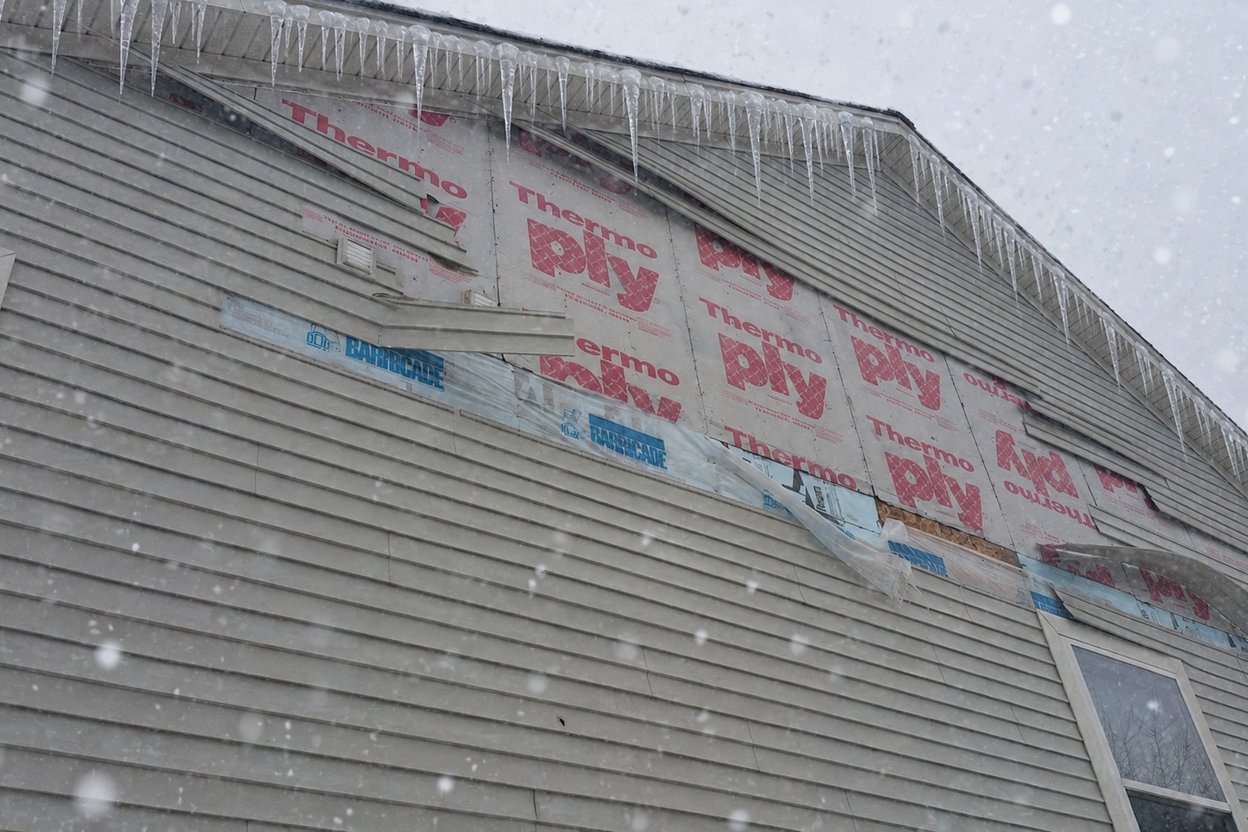
- Panels out of their lock. One windy night and a loose panel turns into a wall of panels on the lawn. See wind-blown and unlocked siding panels.
- Holes and open spots. Water gets in, freezes, and pushes things apart. Animals move in for the winter too.
- Missing trim at windows and roof lines. Melting snow runs right into those gaps.
- Anything near a gutter that's overflowing. Ice dams and overflow dump water behind the siding.
Can wait
- Fading and color differences
- Small dents in aluminum or steel that aren't open
- Cosmetic scuffs
- A whole-wall match that needs a special order. A temporary patch can hold it until spring.
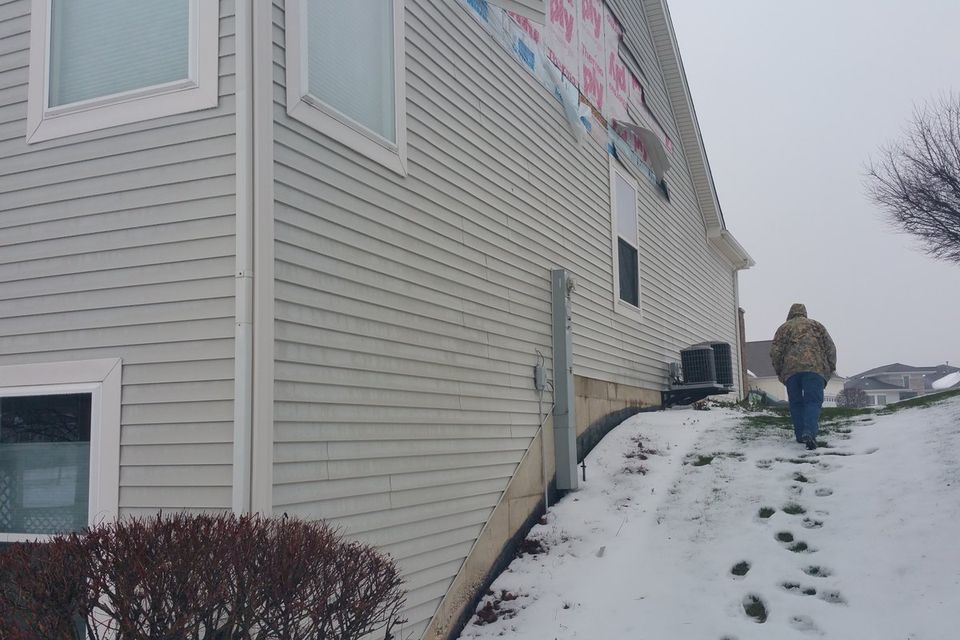
Working on vinyl in the cold
Vinyl gets stiff and brittle in the cold. It can crack when you cut it, unlock it or bend it. A few habits help:
- Keep panels in a warm truck or garage until you need them.
- Cut slowly. A fine-tooth blade works better than snips on cold vinyl.
- Be gentle unlocking old panels with a zip tool.
- Leave room for growth. A panel hung tight in January can buckle in July. Space the ends and nail in the center of the slots.
Some days are just too cold. Plenty of repair guys draw a line on temperature and wind. When it's past your line, do a temporary patch and come back.
Tell the customer the plan
"I'll fix the loose panels and the hole now so nothing gets worse this winter. The color match on the rest can wait for spring. I'll call you in March." Then put it on your calendar.
That spring call is work you've already booked in a slow month. See winter work for a siding repair business.
Inside Siding Pro Academy, members share how they work in the cold and what they line up for spring.