Replacing one damaged vinyl panel without tearing apart the wall is the core skill of siding repair. Done right, it takes well under an hour and you can't tell where the repair was. Here's how.
Tools
- Siding removal tool (zip tool): the hooked tool that unlocks vinyl panels.
- Flat pry bar or nail puller
- Hammer or a nail gun set up for siding
- Tin snips or a utility knife for cutting panels
- Tape measure, speed square
- Replacement panel in the right color and profile
Step by step
- Unlock the panel above the damaged one. Hook the zip tool into the bottom lip (the buttlock) of the panel above, near the end, pull down and out, and slide it along to unzip the lock.
- Lift the panel above gently to expose the nails on the damaged panel. Go slow, especially in cold weather when vinyl is brittle.
- Remove the nails from the damaged panel's nailing hem with a flat bar or nail puller.
- Unlock and remove the damaged panel from the panel below it.
- Cut the replacement to length if needed. Leave room for expansion at J-channel and corners, as the manufacturer's instructions say. Siding expands and contracts with temperature.
- Slide the new panel into place and lock its bottom edge into the panel below.
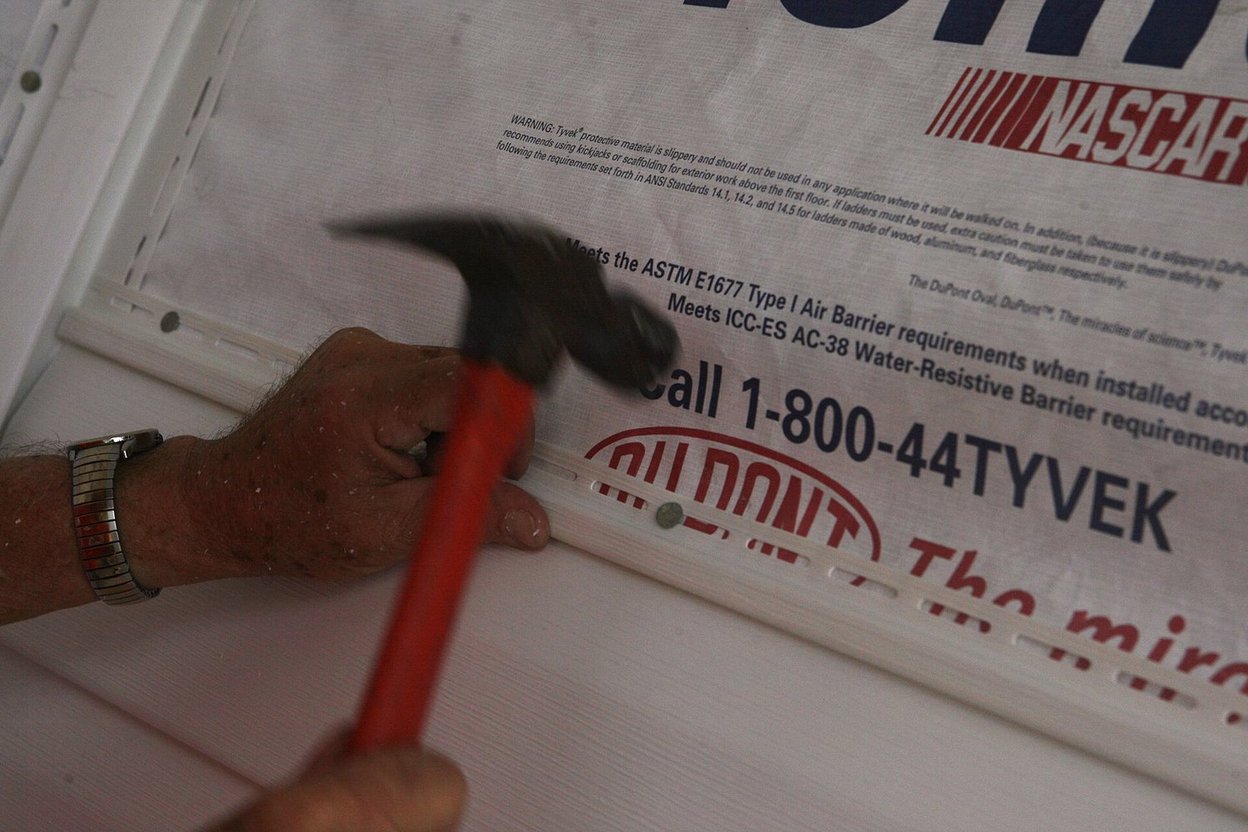
- Nail it correctly: nails in the center of the nailing slots, roughly every 16 inches into the framing or as the manufacturer specifies, and not tight. Leave a little space under the nail head so the panel can move. Nailing tight is the number-one cause of wavy, buckled siding.
- Re-lock the panel above with the zip tool, pushing up and in as you slide it along.
Common mistakes
- Nailing tight or through the face of the panel.
- No expansion gap, which leads to buckling in summer.
- Forcing brittle vinyl in the cold. Warm the panel first.
- Tearing the panel above by pulling too hard with the zip tool.
- Ignoring what's behind it: if the sheathing or wrap is damaged or wet, fix that first.
When the color doesn't match
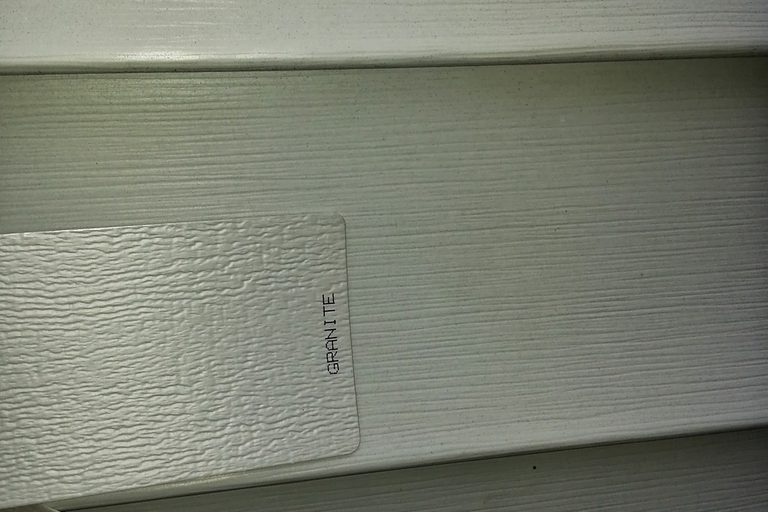
Faded siding next to a new panel stands out. Options: borrow panels from a less visible wall (like a garage or back wall) and put new siding there, or look for salvaged or close-match panels. Matching discontinued siding is its own skill, and one of the reasons customers will call you back.
This repair is the foundation of the 10 most common siding repair jobs. Inside Siding Pro Academy, we go through the techniques for each one, including the tricky matches.
Photo: from a real Siding Pro Academy repair job.
Photo: USMC-111010-M-UY543-005 by Cpl. Jonathan G. Wright, Public domain.