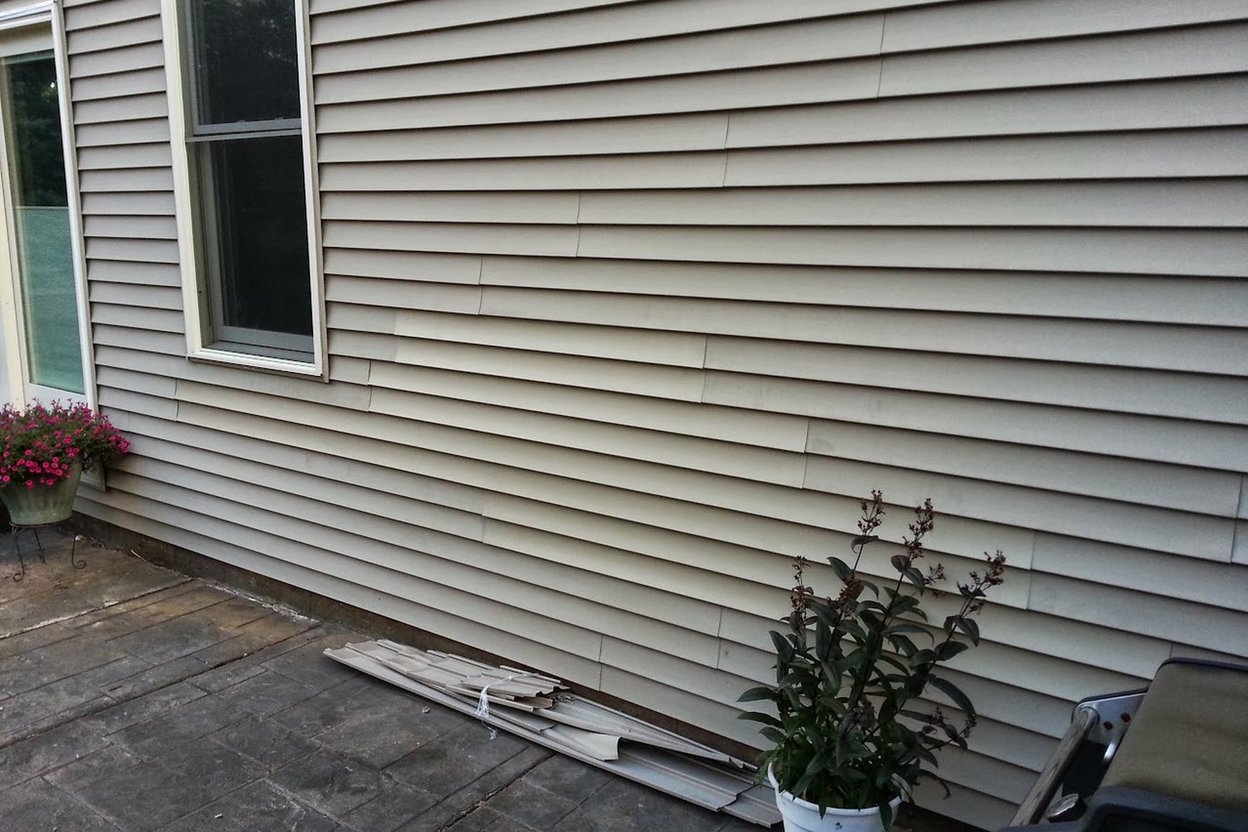
Every summer the phone rings with the same call: "We put the grill too close to the house and the siding melted." It's one of my favorite jobs. It's usually quick, the cause is obvious, and the homeowner is just relieved somebody will come out for it.
Why vinyl melts
Vinyl siding starts to soften and warp at a fairly low temperature compared with what a grill puts out. A gas grill a foot or two from the wall, or a smoker venting toward it, can warp panels in one cookout. Reflected sunlight from certain energy-efficient windows can do it too, which is worth knowing when the homeowner swears there was no grill nearby.
What you'll find
- Warped panels that look wavy or sagging.
- Melted holes where the panel actually burned through.
- Damaged trim: corner posts, J-channel around a nearby window or door, and sometimes soffit if the heat went up.
- Discoloring on panels nearby that aren't warped but look scorched.
Check behind it. Look at the house wrap and sheathing under the panels. Usually it's fine, but if there was real fire, check for scorching and moisture.
What to replace
Melted siding doesn't come back. Replace:
- Every panel that's warped, holed or scorched.
- Trim that's warped or discolored.
- Anything you can't get to lock properly.
Usually it's a handful of panels in one area, often on the back of the house by a patio or deck. That means it's a short job if you have the panel. If the siding is discontinued, see how to match discontinued vinyl siding.
Doing the job
- Take photos before you touch anything.
- Unlock the panels above the damage with a zip tool.
- Remove the nails and the damaged panels.
- Install the new panels, nailing in the center of the nail slots, not tight. Vinyl has to move.
- Relock everything above it.
- Take after photos.
On a basic grill melt with matching siding, you can be in and out quickly. That's why it's profitable. With an average ticket around $350, a couple of quick grill melts in a day is a good day. See replacing a single vinyl panel for the step-by-step.
Inside Siding Pro Academy, we show how to price grill melts so you're paid for the trip, not just the panels.
Price it by the job, not the hour
The homeowner doesn't care that it took you 45 minutes. They care that it looks like it never happened. Price grill melts by the job, with a minimum charge that covers your trip, setup and materials. A quick job priced by the hour is a job that barely pays.
Talk about insurance
Some homeowners ask if insurance covers it. Sometimes it does, but most small grill melts cost less than the deductible. Give them your price and a clear invoice with photos. If they want to file, that's their call.
Leave them with one tip
Before you leave, tell them to keep the grill a safe distance from the house, following the grill manufacturer's instructions, and to watch for reflected sunlight from windows if a panel melts again without a grill nearby. They'll remember you as the guy who helped, and they'll call you for the next job.
Grill melts are the kind of work that builds a repair business: quick, common, and every homeowner knows a neighbor who did the same thing. Leave a card with the neighbors, too.
Photo: from a real Siding Pro Academy repair job.