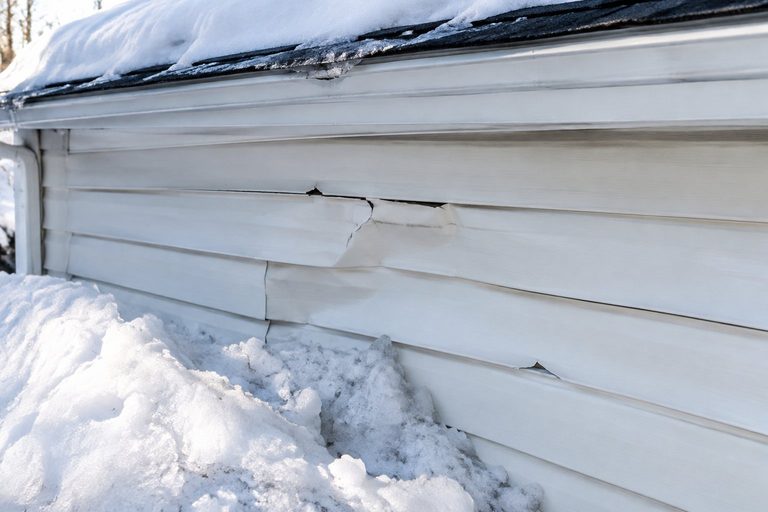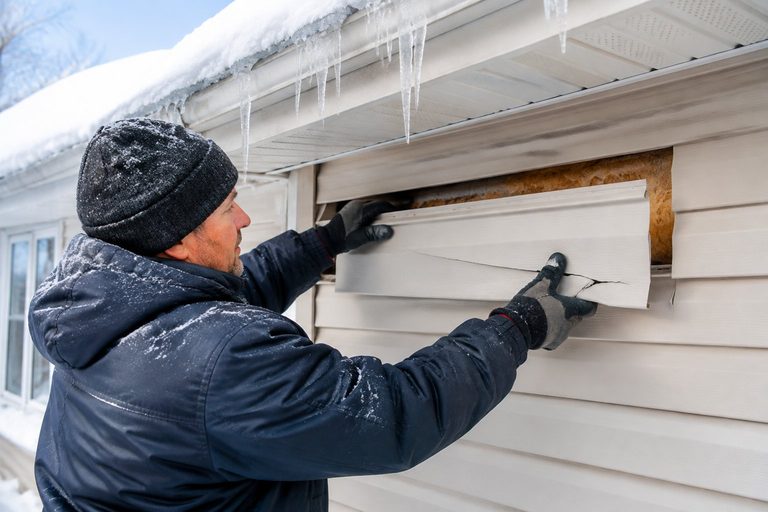
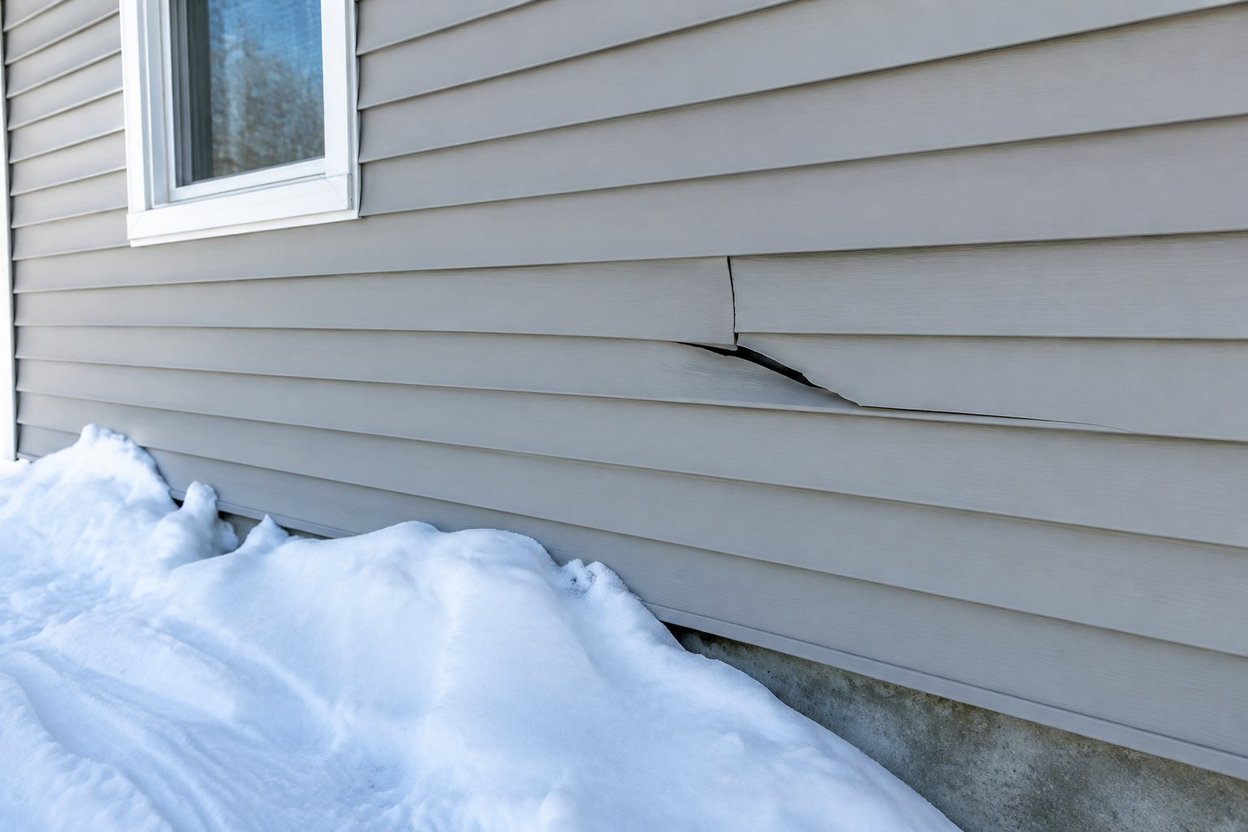

You pull into the driveway after the first real snow of the season. The cracked panel the customer called about is right there at chest height. The bottom of the wall is gone, buried under a drift that slid off the roof or got shoveled up against the house. They want a number before you leave. You can give them one, as long as you're clear about what it covers. Price the damage you can see and measure today. Whatever is under the snow needs another look before you put a price on it.
Yes, but say what the price covers
I'm not talking about the legal meaning of "quote." That depends on where you work and what your contract says. I'm talking about estimating, which means not promising work you haven't seen.
So the honest answer is yes, with limits. You can give a preliminary estimate. Or you can quote a repair that's clearly defined and visible: this panel, this course, this corner, these measurements. What you shouldn't do is promise the full scope when part of the wall is under snow.
For the buried part, you have three choices:
- Inspect after the snow is safely cleared. That could happen the same day if someone can expose the wall.
- Come back after it melts. This is the simplest option if the customer isn't in a rush.
- Price a separate inspection visit, agreed on ahead of time, for the concealed area.
Here's how I put it to the customer: I can price what I can inspect. The buried part needs another look. Most people get that right away. It sounds like someone who won't guess with their money.
Write down what you can see, and where the snow starts
Before you talk numbers, make a simple field record. It protects you, and it's the backbone of the estimate.
- Which wall (front, left side, back, garage end) and where on it
- The visible damage: cracks, holes, loose or missing pieces
- Measurements you can actually reach
- Siding profile and color, so you can match it
- Trim involved: corners, J-channel, window and door trim
- Photos, close-up and wide
- The snow line: a photo and a note showing exactly where coverage starts
That last item matters most. It marks the line between what you inspected and what you didn't.
Ask the customer for older photos of the wall. Summer pictures, listing photos, anything they have. They're useful background. But tell them plainly that an old photo can't show what's under the snow today.
Then list what you'll come back for: the lower courses, the starter detail, where the wall meets the foundation, and the finished ground level.
Even with no snow at all, looking at siding only tells you so much. The InterNACHI standard for exterior cladding inspections is limited to visible, accessible surfaces. It doesn't require the inspector to move snow or ice or take cladding off. That's a home-inspection standard, not a rule for your estimates, but the reasoning carries over. What's behind the siding stays unknown until the siding comes off.
Get the wall uncovered safely, or come back
If the customer wants an answer before the melt, settle who clears the snow and how much before anyone picks up a shovel.
There are two different jobs here:
- A walking route to the wall, so you can get there and work without slipping. OSHA's winter guidance is basic and worth following: clear snow and ice from walking surfaces and wear footwear with real traction.
- Uncovering the siding itself. This needs more care. A shovel blade jammed against cold vinyl can do the damage you were called out to fix.
I won't give you one digging method or one clearance width, because every site is different. Use judgment. If ice is frozen onto the siding, or the footing still isn't safe, put that part of the inspection off. Chipping ice off cold vinyl so you can write a price today is a bad trade.
And remember what exposing the wall gets you: a look at the siding face. The panel can look fine while the sheathing behind it is a different story. Concealed damage often stays hidden until the siding is off.
Check the bottom detail before you price a panel swap
A crack near the bottom of the wall looks like a one-panel job. Sometimes it is. Sometimes the problem is at the bottom detail.
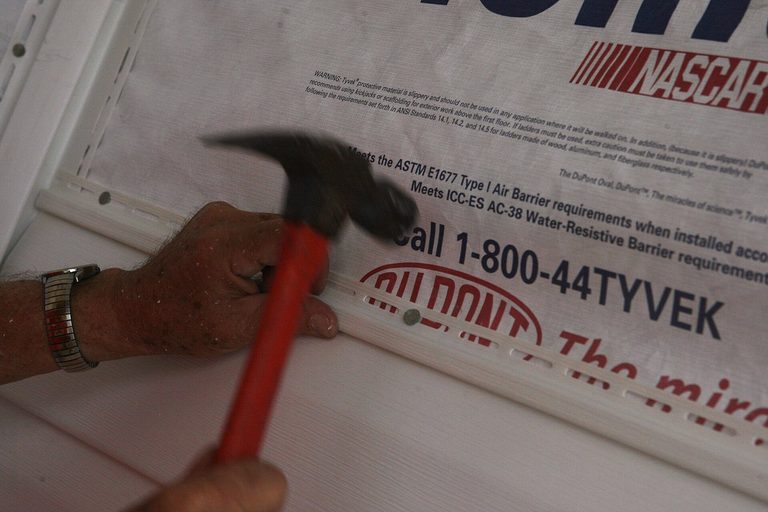
Vinyl siding isn't watertight. CertainTeed's installation guidance says so directly and calls for a weather-resistant barrier behind it, plus flashing around windows and doors. The siding is one layer of a water-management system. When you replace a lower panel, you may also find, or disturb:
- The starter strip and how it's attached
- Trim at corners and openings
- The water-resistive barrier
- Flashing
- Damaged backing or sheathing
Keep finished grade and the snow surface separate in your head. Snow is temporary. The ground under it is what counts for clearance, and you can't judge that until you can see it.
Don't carry one clearance number from job to job. Different siding materials have different requirements. Fiber cement makers, for example, publish their own clearance details. Check the instructions for the product actually on that wall and whatever local rules apply.
Keep the job scoped to the localized repair. If you see signs of bigger trouble, like soft sheathing, water staining, or damage running along the whole bottom of the wall, that calls for its own investigation and its own price. Don't fold it into a panel swap.
Write the uncertainty into the estimate
This is where the field record pays off. Break the estimate into separate parts:
- Inspection and access. Clearing, exposing the wall, and the return visit if one is needed.
- Defined siding work. The repair you saw and measured, described specifically.
- Concealed repairs. Anything found under the snow or behind the siding, priced only after inspection and approved separately.
When you build each part, consider labor, materials, travel, snow clearing, cleanup, and a return trip. These aren't standard fees. They're things to weigh based on your area, your costs, and the job in front of you. Some operators build a return trip into the price. Others list it separately. Pick one and be consistent.
Here's wording you can adapt:
> Snow concealed the lower wall at inspection. This estimate covers only the repair area described below. Work in the concealed area will be priced after access and inspection. Additional concealed damage requires a written scope and price approved before that added work begins.
One caution: your exclusions have to match the rest of your contract. If one paragraph says concealed work is excluded and another says "complete siding repair, all damage," you've written a fight for later. Read the whole document as the customer will.
Some places put this in law. In California, home-improvement contracts covered by the state's rules require changes to be in writing and signed before the changed work begins. The state's contract law also says a change order has to identify the changed work, the amount added or taken off, and how it affects the progress-payment schedule. That's one state's rule, not a national one. Check what applies where you work. Either way, writing the change down and getting approval before you do it is good practice.
The price decision isn't the work date
Agreeing on a price today doesn't mean today is a good day to install. Those are separate decisions.
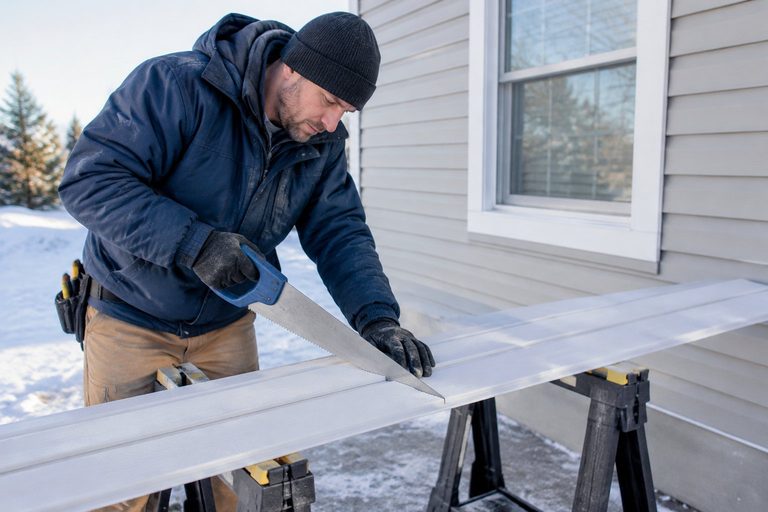
Vinyl gets more brittle in hard cold and cracks more easily from impact. It also expands and contracts with temperature, and installation guidance from the industry covers cutting and fastening in cold weather. Follow the instructions for the product you're installing, not habit.
So before you leave, give the customer one clear next step:
- Clear access to the lower wall so you can inspect it, or
- Approve a defined inspection visit to expose and check the concealed area, or
- Schedule a return after the melt and finish the estimate then.
Say it calmly. Protecting your scope isn't something to apologize for. It's how the job stays fair for both of you.
Sources (13)
- InterNACHI Standards of Practice for Inspecting Exterior Wall Cladding
- InterNACHI, How to Inspect the Exterior (manual)
- InterNACHI, Vinyl Siding Inspection
- Ernie's Gutter, siding contractor and concealed damage
- OSHA, Winter Weather Hazards
- CertainTeed, How to Install Vinyl Siding
- Vinyl Siding Institute, Installation Manual (2020)
- James Hardie, HardiePanel Vertical Siding Technical Notes
- California CSLB, What Is a Contract
- California Business and Professions Code §7159 (Justia)
- CSLB, Contracting for Success
- Reddit r/HomeInspections, inspecting with heavy snow
- Reddit r/Roofing, siding in winter