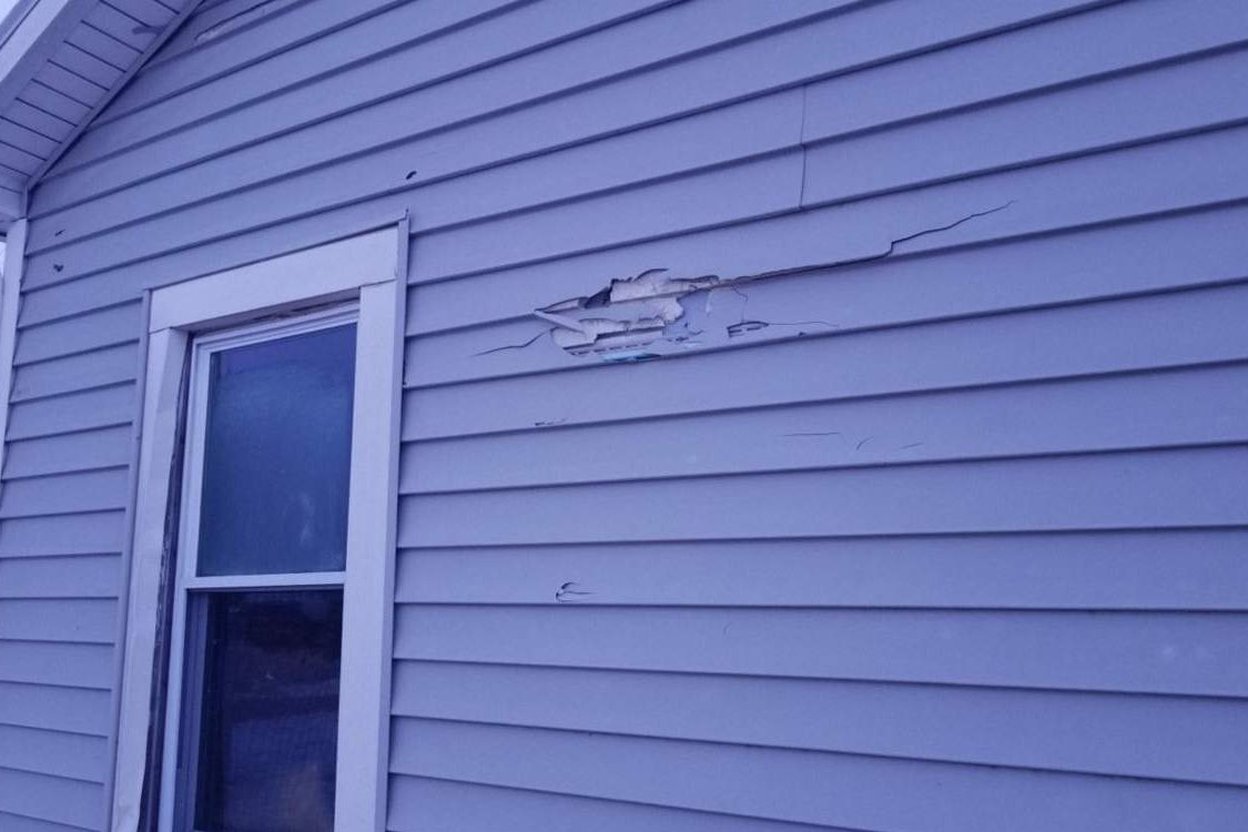
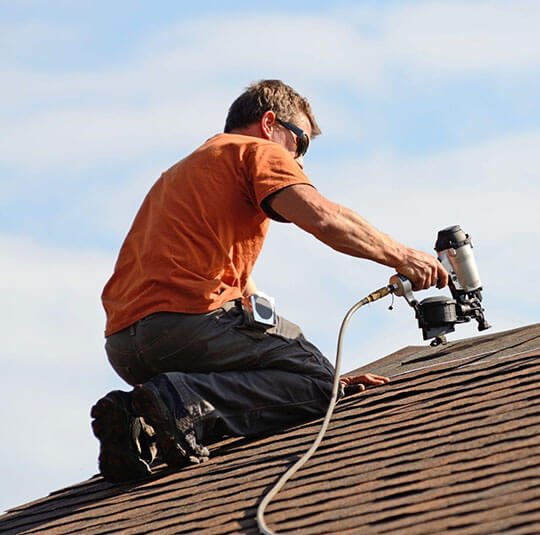
It's early October. You open the forecast for next week and see lows of 41, 38 and 42. Then the phone rings with a customer whose siding blew loose in last weekend's wind. You can take the job. Mechanical repairs keep going when nights drop near 40°F: relocking a course, swapping a cracked panel, refastening a loose hem. What changes is the gap you leave and how you cut. Caulk and paint are separate. Each product has its own minimum temperature, and you go by that.
Nights near 40°F don't stop the work
The calls you can still run are the mechanical ones:
- Relocking a course the wind pulled loose
- Replacing a cracked panel
- Refastening a loose nail hem
- Swapping a short piece of J-channel or soffit
The overnight low isn't the number that matters. What matters is how warm the panel and the wall are while you cut and fasten the piece.
The Vinyl Siding Institute (VSI) installation manual doesn't tell you to stop working when it's cold. It tells you to open the end clearance when you're installing below 40°F. CertainTeed's 2025 guide splits it the same way. Both tie the gap to the temperature at the time you install. If you fasten a repair on a 50°F afternoon, it gets the normal clearance, even if that night drops to 38.
Some products have a real stop, and it's well below 40°F. Alside's ASCEND composite cladding says not to install below −5°F. So for vinyl, 40°F changes how you set the piece. It isn't a stop-work line.
What changes on the panel when you're working under 40°F
End clearance opens up. VSI's basic rule is at least 1/4 inch where a panel ends at an opening or a stop. Below 40°F, that minimum becomes 3/8 inch. CertainTeed uses the same pair where horizontal siding goes into corner posts and J-channel. The reason is simple: a panel you set cold will grow when it warms up. VSI says vinyl can move 1/2 inch or more over a 12-foot-6 length in a normal year.
Longer pieces need bigger gaps. On runs of 20 feet or more, VSI sends you to the maker's instructions for a larger gap. CertainTeed's band board is one example:
- Under 12 feet: 1/4 inch above 40°F, 3/8 inch below
- Over 12 feet: 3/8 inch above 40°F, 1/2 inch below
Composite brands set their own rules. Gentek ALIGN uses the same 1/4- and 3/8-inch steps for its J-channel clearances at 40°F. Its corner posts that end at a porch, deck or roof get 3/8 inch per 10 feet above 40°F and 1/2 inch per 10 feet at 40°F or below. ASCEND uses that corner-post pair too, and its 5- and 7-inch planks keep 3/8 inch in every receiving channel at any temperature.
Fasteners stay loose and centered. Center the nail in the slot, drive it straight, and leave the head proud enough that the panel can slide. VSI puts that at about 1/32 inch. CertainTeed's 2025 guide says 1/16 inch. Go by the brand that's on the wall.
Laps and ends stay uncaulked. VSI says panel ends in inside corners, outside corners and J-trim stay uncaulked, and so do overlap joints. That rule doesn't change in the cold.
Cut slower. In very cold weather, VSI says to feed a circular saw through slowly so the panel doesn't chip or crack, and to run a fine-tooth plywood blade backwards. CertainTeed's rule of thumb: the colder it is, the slower the feed.
On temperature: VSI just says "below 40°F" and doesn't say whether that's the air or the panel. CertainTeed's shake gauge reads the panel. Gentek's corner-post gap uses air temperature. Use whichever one the sheet for that brand names.
Repairs that are still a normal ticket
My average ticket on my mix of jobs was about $350 a repair. That's my number, not a promise for your zip code. Most of that work still happens in a cold snap.
Panel swap. VSI's method:
- Hook the zip tool behind the bottom of the course above the bad panel and unzip that lock.
- Pull the fasteners and take out the damaged panel.
- Lock and nail the new panel.
- Zip the upper course back down over the new lock.
The new panel still gets a loose nail and the clearance for the temperature you're working in. Set it below 40°F and it gets 3/8 inch at the stops.
Relock. It's the same zip-tool move without the new panel. Nail the hem loose so the course can still move.
Cut course under a window or at the top of a wall. Use a snap-lock punch. It puts lugs in the cut edge so the piece clips into undersill or finish trim and can still move. VSI lists the unlocking tool and the snap-lock punch as standard tools. VSI's quick tips say to overlap panel faces about 1 inch.
Polymer shingles. CertainTeed's individual polymer shingles get a pneumatic stapler above 40°F. Below 40°F, hand-nail them, and only through the pre-formed holes. CertainTeed says shingles stapled below 40°F may crack from the cold, and that cracking isn't covered by the limited warranty. Pneumatic nail guns aren't approved for them at any temperature.
Insulated lap. VSI says to butt the foam at the lap, except in cold weather, when you follow the manufacturer's instructions. Read that brand's cold-weather foam note before you set it.
Before you unzip old siding on a cold morning, flex it. Bend a scrap or a hidden edge. If the panel won't flex, stop before you start a crack running across the wall. Come back in the warm part of the day, or quote a bigger repair.
Caulk, paint, staples and trim go by a different thermometer
Siding joints don't get caulked. Penetrations, trim and cut ends often do, and every tube has its own minimum temperature. That means a night near 40°F can be fine for one product and too cold for the next one in your truck.
Sealants:
- OSI QUAD MAX: applies from 0°F to 140°F. Clear ice, snow and frost off the joint first. Cure takes 24 to 72 hours depending on temperature, humidity and bead depth. For easier gunning in the cold, keep the cartridge at room temperature for at least 24 hours.
- DAP Dynaflex Ultimate: applies from 20°F to 120°F, on a surface free of ice and frost. Cool, humid air slows the dry time.
- DAP Dynaflex Ultra: a different tube. Apply it above 40°F; the listed range is 40°F to 100°F. Don't mix the two up.
- Sashco Big Stretch: the surface has to be 40°F to 120°F. Keep it out of direct rain for 1 to 3 days.
Paint:
- Sherwin-Williams Duration: the air, the surface and the paint all have to be above 35°F and at least 5°F above the dew point. Don't apply it if the air or surface might drop below 35°F within 48 hours, or if rain or snow is expected within 2 to 3 hours. Between 35°F and 45°F, expect about 2 hours to touch and 24 to 48 hours to recoat.
- LP SmartSide ExpertFinish touch-up: only when the air, the siding and the paint are all above 50°F. Store it between 40°F and 100°F. If it may have frozen, don't use it. It's meant for small scratches and spots, not big areas.
Trim:
- LP SmartSide trim: the instructions call for an exterior construction adhesive rated to a minimum application temperature of 40°F, with at least 300 psi bond strength.
- AZEK PVC trim: usually needs no pilot hole unless the fastener is large or you're installing at low temperatures. At 40°F or below, ceiling spans that were 16 inches on center drop to 12.
Work the warm part of the day
Stock that sat in the truck overnight is as cold as the truck. VSI's storage rules are about keeping cartons flat, fully supported, dry and stacked no more than six high. Nothing in them says to warm the cartons up. So the piece goes on the wall at whatever temperature it actually is, and you space it for that temperature.
The panel's temperature can also change while you're up there. CertainTeed's Cedar Impressions panels carry a PanelThermometer that reads the panel itself. It has spacing lines for readings of 0, 30, 65, 100 and 130, and at 160 the panels butt tight. CertainTeed notes that panels you already spaced at another temperature stay as they are. Don't come back later to close a gap you left on purpose.
The same goes for caulk. A QUAD MAX cartridge that spent the night in the truck needs a day at room temperature before you can count on it to gun well in the cold. Keep a few in the house.
With Halloween coming and Thanksgiving after it, the daylight keeps getting shorter. Book the cut-and-fasten jobs from late morning to mid-afternoon.
What to tell the customer
Split the visit when you need to. Today, you lock the course and make it weather-tight. If the forecast is too cold for the caulk or paint the job needs, you come back on a warmer day. Customers understand that when you show them it's a label rule, not your schedule.
You can still do a full run in the cold, as long as the gaps match the length of the piece and the temperature you're working in.
Don't face-nail a loose course "just until spring." VSI only allows face nails in limited spots where the nail hem is gone. A face nail fights the 1/2 inch or more a 12-foot-6 panel moves in a year, and that buckle is your callback. CertainTeed also says installs that don't follow its guide can lose the limited warranty unless it approves the change in writing.
Paint works the same way. A night near 40°F can still be inside Duration's limit, since its line is 35°F held for 48 hours. That same night doesn't make an LP touch-up okay unless the air, the siding and the paint are all above 50°F while you brush it on.
Sources (20)
- VSI Vinyl Siding Installation Manual (2022)
- VSI Quick Tips for Installing Vinyl Siding
- CertainTeed Vinyl and Polymer Siding Installation Guide (2025)
- ASCEND Installation Guide (2026)
- Alside ASCEND Installation Guide
- Gentek ALIGN Installation Guide (2024)
- Gentek ALIGN Installation Guide (2022)
- OSI QUAD MAX Technical Data Sheet
- OSI QUAD MAX data sheet (retailer copy)
- Henkel QUAD MAX Best Practice Guide
- DAP Dynaflex Ultimate TDS
- DAP Dynaflex Ultra use and care
- DAP Dynaflex Ultra product spec
- Sashco Big Stretch TDS
- Sashco Big Stretch Tech Data
- Sherwin-Williams Duration Product Data Sheet
- Sherwin-Williams Duration product page
- LP SmartSide ExpertFinish Application Instructions
- LP SmartSide Trim Instructions
- AZEK Trim and Moulding Install Guide (2024)